
How Much Oil Consumption Is Normal?
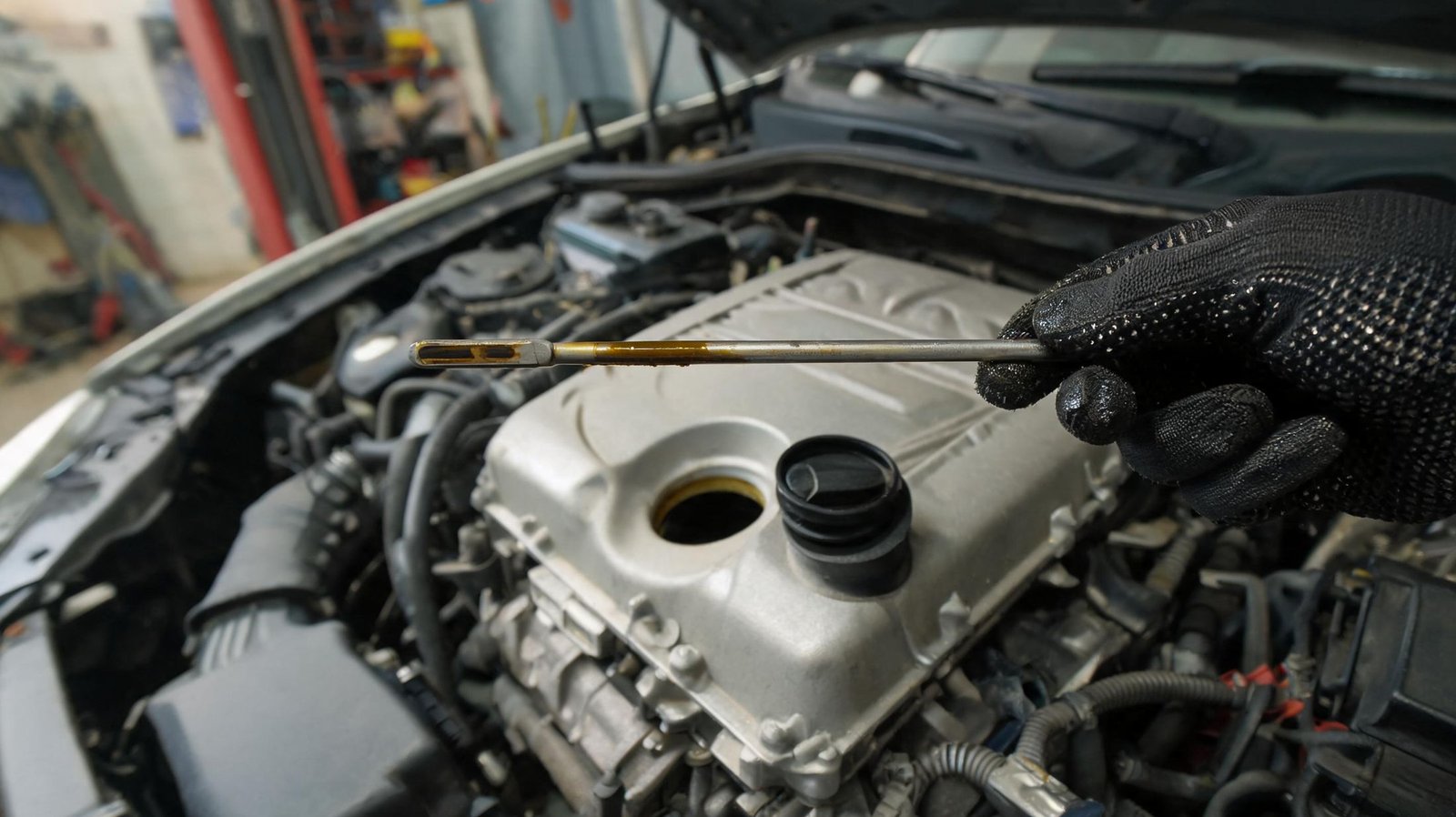
Top summary answer
Most manufacturers accept up to roughly one quart per 1,000 miles as normal, and some European handbooks allow more. The useful answer is not the number but the trend: consumption that has doubled in a year is a fault, even if it is still inside the manufacturer's limit.
Why is my car using so much oil?
An engine burning oil loses it three ways: past the valve guides, past the piston rings, or out of a leaking seal or gasket. Blue smoke on start-up points at the guides; smoke under load with a rising consumption trend points at the rings; drips and staining underneath point at the seals.
The first job is to separate a leak from a burn. A leak leaves evidence on the ground, the under-tray or the back of the engine; a burn leaves smoke, fouled plugs and a clean underside. We have had customers buy engines they did not need because nobody looked under the car.
Once you know it is burning, the timing tells you where. Cold-start puff means valve-stem seals. Smoke when idling after a run means guides or crankcase pressure. Smoke that increases under load means rings or a turbo seal. The visible end of that story is a blue exhaust — our blue-smoke guide reads the same clues at the tailpipe.
- Blue smoke for a few seconds after a cold start → valve-stem seals
- Smoke only after a long idle → valve guides or PCV system
- Smoke that worsens under acceleration → piston rings or turbo seal
- Oil stains under the car → seals, gaskets, filter housing
- No smoke, no drips, but the level drops → check the PCV system and breather first
Who is this oil-consumption guide for?
This guide is for any driver who has topped up between services and wants a straight answer — is the engine just thirsty, or is it worn — and for the shops and fleets that need the same verdict on the record, with numbers that hold up when a warranty claim or a sale is on the line.
The use case is specific: the dipstick keeps dropping and nobody agrees on what is normal. Keep topping up and hope, pay for diagnosis, or start pricing a replacement engine? That is the everyday reality of the used-engine trade, and the answer changes completely once consumption is actually measured rather than guessed — most ‘oil burners’ are settled by a notebook and a quart, not a bottom-end rebuild.
The decision context is money: a PCV valve costs little, a top-end seal job is a workshop afternoon, and a tested replacement engine costs more than either — which is why the sections below run cheapest checks first, engine verdict last. Every step is written the way the phone calls actually go, so you never spend three thousand dollars avoiding a two-hundred-dollar fix.
If you are an owner, work through the guide in order and stop wherever the job stops being DIY. If you run a shop or a fleet, treat the measurement log and the cost table as your selling sheet — and the experience section as the checklist that keeps a comeback off your bay.
- Owners topping up between services — before agreeing to any repair
- Buyers judging a used car or used engine — measure before you commit
- Independent shops separating cheap causes from real wear
- Fleet workshops documenting consumption on the record
What do manufacturers actually say is normal?
It varies widely. Many domestic and Japanese handbooks treat up to one quart per 1,000 miles as acceptable; some European manufacturers allow more in writing. That is why the trend matters more than the absolute figure.
We quote the handbook range honestly because it cuts both ways: it stops an owner panicking at a normal appetite for oil, and it stops a seller pretending that a quart every 400 miles is 'within spec'.
What no handbook excuses is a sudden change. If last year cost you half a quart between services and this year costs you a quart every 800 miles, something has changed inside the engine — whatever the manual permits.
| Consumption | Typical interpretation | Sensible action |
|---|---|---|
| Under 1 quart per 3,000 miles | Normal for many higher-mileage engines | Note it at each service |
| 1 quart per 1,500–3,000 miles | Early wear — often PCV or seals | Diagnose the cheap causes first |
| 1 quart per 800–1,500 miles | Ring, guide or turbo wear developing | Compression and leak-down test |
| 1 quart per 500 miles or less | Serious internal wear | Do not treat topping up as a fix — book an inspection |
Is the engine burning oil, or is it leaking oil?
Burning leaves no trace except the dipstick and the exhaust — no drips, often a puff of blue smoke. Leaking leaves evidence: spots on the driveway, a stained sump or a wet bellhousing. Burning and leaking have completely different fixes and price tags, so test for both before you commit.
A proper diagnosis splits consumption into its paths: valve guides and seals (smoke on start-up), piston rings and the oil-control ring (smoke under load), the PCV system (crankcase pressure pushing oil past seals), and a turbo seal (smoke after a long idle). A leak-down and compression test separates rings from guides; a sheet of clean cardboard under the car overnight separates leaks from burning in seconds.
The measurement process is the same on every engine, but the thresholds differ. Take the G4KM 2.5L turbo in the Hyundai Santa Fe versus the G4KH 2.0L turbo in the Kia Sorento — different specifications, same log-it-and-measure method. If the measurement says the engine is genuinely worn, we supply a used Hyundai Santa Fe engine for sale and a reconditioned Kia Sorento engine for sale.
- Family codes vs tunes: Hyundai's G4KM is a Smartstream 2.5 turbo, while the G4KH is the earlier Theta II 2.0 turbo — similar-looking codes, different engine families.
How do I measure oil consumption properly?
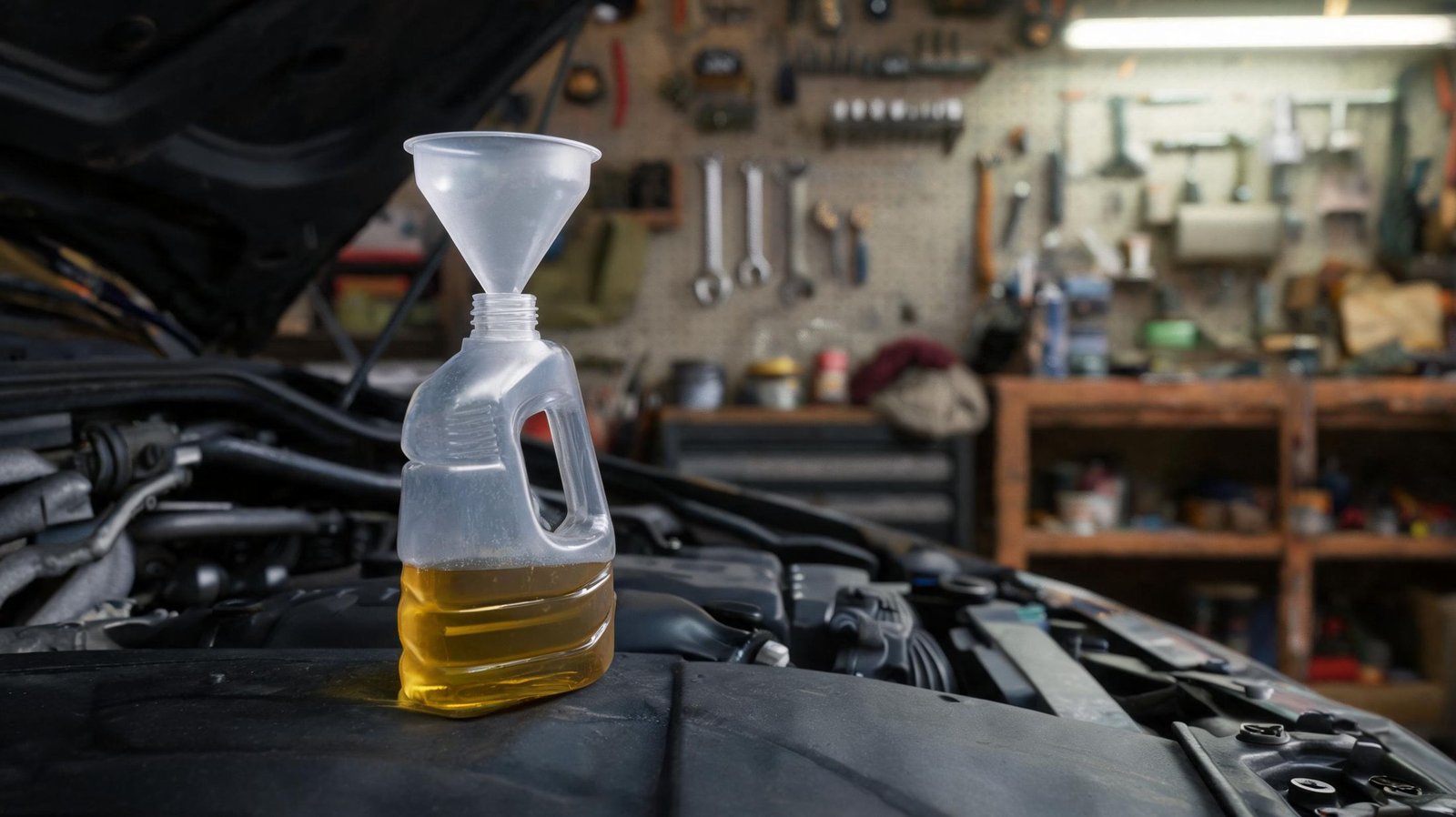
Top up to the full mark on level ground, record the odometer, then check at every fuel stop and record how much you add. Log every oil top up between services — the trend over four weeks and four tanks is what tells you whether this is a characteristic or a fault.
Dealers charge for an oil-consumption test because it needs discipline, not tools. You can run the same test at home for the price of a notebook and a quart of the correct oil.
Use the grade and specification the handbook calls for. Wrong viscosity, or an oil that does not meet the manufacturer's approval, can raise consumption on its own — particularly on turbocharged direct-injection engines where the specification also covers low-speed pre-ignition protection.
- Park on level ground, engine cold, and top up exactly to the full mark
- Record the odometer reading and the date
- Check at every fuel stop; add oil only in measured amounts (use a marked bottle)
- Drive your normal pattern for at least four weeks
- Divide total oil added by miles covered to get quarts per 1,000 miles
What causes oil consumption to rise?
In rough order of cost: a stuck or failed PCV valve and blocked breather, worn valve-stem seals and guides, worn rings and cylinder bores, a failing turbo seal, and — on some engines — a failed piston-oil-control ring design that is a known manufacturer issue.
Start cheap. A PCV valve costs very little and is the single most common cause of an oil appetite that appeared out of nowhere — but it is also the check most often skipped before an engine is condemned.
Crankcase pressure is the concept behind most of it. When the breather system cannot vent, pressure builds and pushes oil past seals and rings. That is why we pressure-test the crankcase and inspect the breather hoses before ordering a compression test.
- PCV valve stuck open or closed, or a blocked breather hose
- Wrong oil grade or an oil that does not meet the manufacturer specification
- Worn valve-stem seals and guides
- Worn piston rings and cylinder bores
- Turbocharger seal failure (smoke under boost)
- A known ring-pack design fault on certain engines
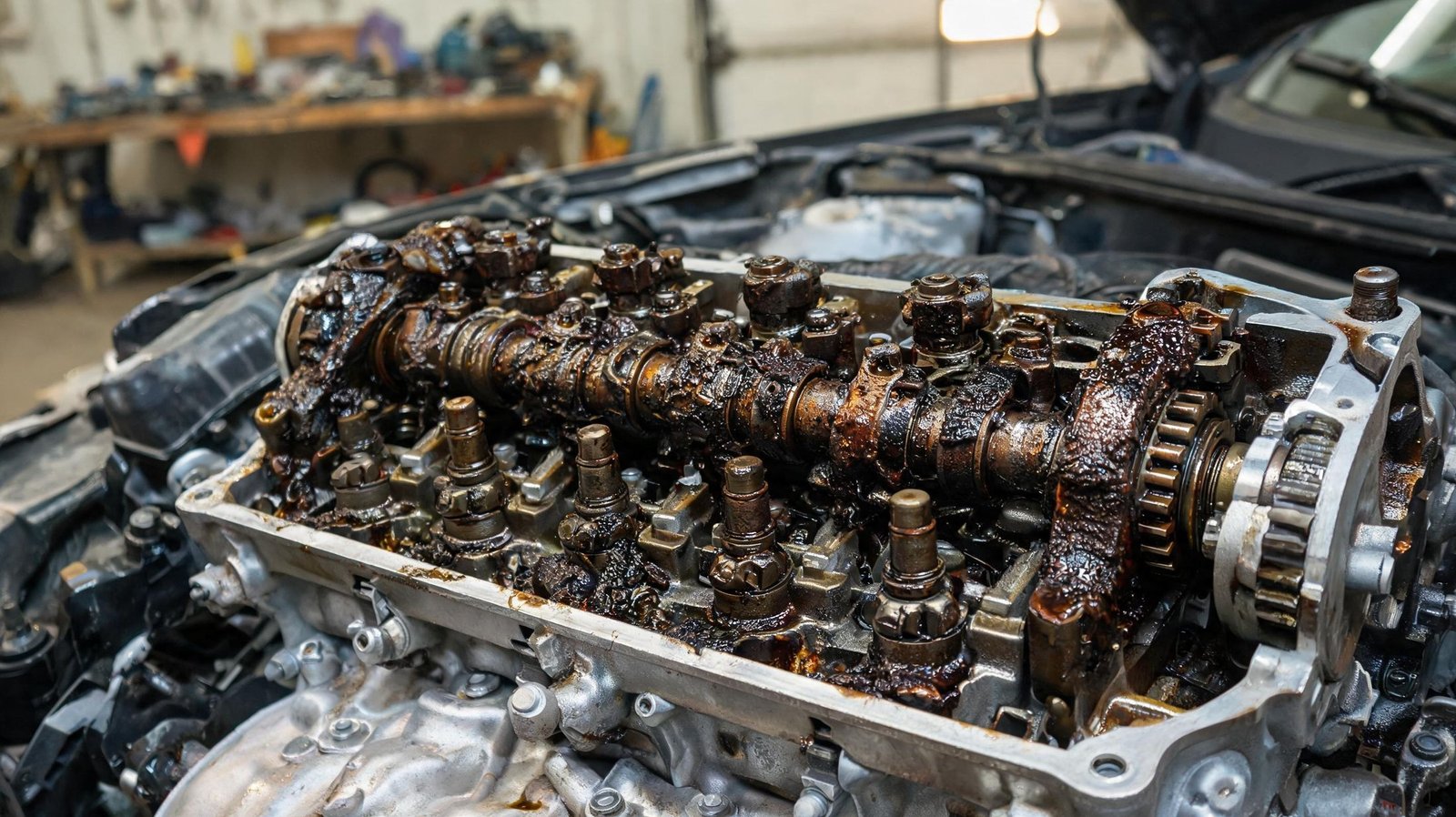
When does oil use mean the engine is finished?
When consumption is rising steadily, compression is low or uneven, and the car is also showing blow-by (pressure from the oil filler cap) or fouled plugs. At that point the engine is worn, not merely thirsty.
Compression and cylinder leakage tests are the evidence. A compression test compares cylinders to each other; a leakage test tells you where the pressure is escaping — past the rings or past the valves.
If the leakage is at the rings, a rebuild of the bottom end on a high-mileage engine usually costs more than a tested replacement — and you keep the original block's history either way. Left long enough, oil starvation also shows up as knocking under acceleration — evidence the wear has reached the bearings. If that noise has already started, our rod knock or lifter tick guide tells a top-end tick from a bottom-end knock before anything is ordered.
| Evidence | What it means | Path |
|---|---|---|
| PCV replaced and consumption settles | Breather fault | Maintain normally |
| Cold-start smoke only, compression even | Valve-stem seals | Top-end repair |
| Compression low and uneven, leakage at the rings | Bore and ring wear | Replacement engine |
| Leakage past the valves, bottom end healthy | Valve seat or guide wear | Head work |
| Smoke under boost on a turbo engine | Turbo seal | Turbo repair or replacement first |
What does it cost to fix — and what does replacement cost?
A PCV service is $80–$250 and a top-end seal job $600–$1,800. A tested replacement engine typically runs $900–$3,500 plus labour, which is why the cheap checks run first in every case.
Costs look very different depending on where the consumption is coming from, and the diagnosis is what protects the budget. Four hundred dollars of diagnosis can save three thousand dollars of unnecessary engine.
Where replacement is genuinely needed, the tier you choose sets the cover: used, reconditioned or remanufactured, each with a longer warranty than the last.
| Path | Typical cost | Best for |
|---|---|---|
| PCV valve / breather service | $80 – $250 | Sudden consumption with no smoke pattern |
| Valve-stem seals (head on) | $600 – $1,800 | Cold-start smoke, even compression |
| Turbo seal or cartridge repair | $900 – $2,200 | Smoke under boost |
| Tested replacement engine | $900 – $3,500 + labour | Ring wear with low compression |
| Reconditioned / remanufactured engine | $2,000 – $6,000 + labour | Keepers and work vehicles |
What do we supply when the engine is worn out?
Used, reconditioned and remanufactured engines, matched to your engine code and verified against your VIN before dispatch, with free insured freight USA-wide in 12–16 working days.
The platform decides the unit. We supply a used Ford F-150 engine for sale and a reconditioned Ford F-150 engine for sale on the truck side, and a B48 for sale for the BMW engines where oil consumption and turbo seals go together.
Transmissions travel with the same problem: oil-starved engines often take the gearbox with them. We supply a used Ford F-150 transmission for sale and a reconditioned Ford F-150 transmission for sale, plus common units such as a 4L60E transmission for sale, on the same fitment check.
- Used engines — 9 months / 6,000 miles, whichever comes first
- Reconditioned engines — 16 months / 12,000 miles
- Remanufactured engines — 36 months / 36,000 miles
- Compression-tested, run-tested where the unit allows
- Transmissions matched by code alongside the engine
What does A2Z Engines check when an oil-consumption call comes in?
The same ladder every time: how the number was measured, what is leaking, and what the crankcase breather is doing — and only then a compression and leak-down verdict on the engine itself. On the calls we take, the unit is the last suspect, not the first.
Oil-use calls reach us two ways: an owner watching the dipstick drop between services, or a shop that has already topped up twice and wants to know whether to quote seals or an engine. Either way the desk works the same sequence — measurement first, leaks second, breather third, engine verdict last — because that is how the causes rank in practice.
The textbook case on this side of the counter: a B48 or EA888 using a quart every 800 miles turns out to be a stuck PCV valve and a clogged breather hose — the cheapest fix on the list, hidden for months by the top-up habit. We walk through the breather test before a compression test is booked; when the leak-down numbers come back even, that usually closes the case. When they do not, the unit's recorded test results and the 48-hour claim decision take over.
Either way the file matters: the odometer readings, how much oil was added between services, and the test results. It is the same paperwork our claims team asks for — and the same reason every engine we ship leaves the bench compression-tested.
- How the consumption was measured — full-to-full on level ground, same oil grade, odometer logged
- Leaks ruled out first: sump, valve cover, filter housing and rear main seal, overnight cardboard test
- PCV valve and breather circuit tested — the single most common cause of a sudden oil appetite
- Compression and cylinder leak-down with the numbers written down, borescope where accessible
- Verdict and options: PCV or seal repair against replacement pricing — and the claim file if the unit is genuinely at fault
How do I confirm fitment before ordering?
Enter the VIN or engine code in the fitment lookup on the quote page; you get nine options across three condition tiers and three warranty lengths, with the code confirmed against your VIN range before dispatch.
If the code on the block is hard to read, decode the VIN with the NHTSA VIN decoder and check the engine code index for where the stamping sits on your platform.
- VIN or engine code in → matched unit out
- Nine options = 3 condition tiers × 3 warranty lengths
- Free insured freight, 12–16 working days, USA-wide
- 48-hour decision on a complete warranty file
What do these terms mean?
Plain-English definitions of the technical terms used in this guide, so you can follow the diagnosis without a workshop dictionary.
Oil Consumption Test — An oil-consumption test measures how much oil the engine uses per 1,000 miles — top up to full, record the odometer and add measured amounts at every fuel stop.
PCV Valve — The PCV (positive crankcase ventilation) valve meters crankcase gases back into the intake; when it sticks, pressure builds and pushes oil past seals and rings — the most common single cause of a sudden oil appetite.
Blow-By — Blow-by is combustion pressure escaping past the piston rings into the crankcase; felt as pressure from the oil filler cap and seen as a rising consumption trend, it points at worn rings and cylinder bores.
Valve Stem Seals — Valve-stem seals stop oil running down the valve guides; when they harden, oil seeps in overnight and burns off as blue smoke in the first seconds after a cold start.
Oil Control Ring — The oil-control ring scrapes excess oil off the cylinder wall on the downstroke; when it sticks or wears, oil reaches the combustion chamber and burns.
Dipstick — The dipstick is the only reliable measure of oil level — read it cold on level ground, and judge consumption by the trend rather than a single check.
Oil Specification — The oil specification is the manufacturer approval code on the bottle; the wrong specification raises consumption and, on turbocharged engines, increases LSPI risk.
Where do these figures come from, and where can I verify them?
The price ranges, test procedures and thresholds in this guide follow standard trade practice and the public technical resources below. You can verify the background yourself:
Ranges are typical US independent-workshop figures and our own condition and warranty tiers — treat them as guidance, not a quote for your vehicle. A2Z Engines is the trading brand of QB AUTOZ LLC, a Mississippi-registered supplier — the company record is on our about page.
- API Engine Oil Matters — viscosity, specification and what oil actually does in service.
- FuelEconomy.gov — official fuel-economy data and why mechanical faults change it.
- EPA vehicle and fuel emissions testing — how oil burning shows up in emissions testing.
Which related guides should I read next?
These are the guides we hand to customers at the end of this conversation — each one picks up a thread from this post and finishes it.
- Why Is My Exhaust Blowing Blue Smoke? — the visible end of oil burning.
- Rod Knock or Lifter Tick: How Do I Tell? — where oil starvation eventually ends up.
- Why Is My Engine Knocking When Accelerating? — load-related noise, one step further.
- Explore the site: shop by make · engine code index · used engines · transmissions — every unit fitment-checked before dispatch.
- Ready for numbers? Get your price — nine options across three condition tiers — or search the full catalogue; more guides live on the blog index.
Frequently asked questions
How much oil consumption is normal?
Many manufacturers treat up to about one quart per 1,000 miles as acceptable, and some allow more in the handbook. A rising trend is the real warning sign, whatever the manual says.
Why is my car burning oil but not leaking?
Oil is passing the valve guides, the piston rings or a turbo seal. Cold-start smoke points at the guides, smoke under load points at the rings or turbo, and blow-by from the filler cap confirms ring wear.
Can I just keep topping up the oil?
Topping up is maintenance, not a repair. If consumption is rising or has passed about a quart per 800 miles, book a compression and leakage test — topping up will not fix worn rings.
What is the cheapest thing to check first?
The PCV valve and breather system. A stuck valve is inexpensive to replace and is a common cause of a sudden oil appetite.
Does the wrong oil increase consumption?
Yes. The wrong viscosity, or an oil that does not meet the manufacturer's approval, can raise consumption — particularly on turbocharged direct-injection engines.
How much does it cost to fix oil consumption?
Between $80 and $250 for a PCV service, $600–$1,800 for a top-end seal job, and $900–$3,500 plus labour for a tested replacement engine where compression proves the bore and rings are worn — see the warranty tiers for cover on each option.
Do you supply transmissions as well as engines?
Yes — used and reconditioned transmissions, including common units such as a 4L60E transmission for sale, on the same fitment check.
What does it mean if my engine is burning oil?
Oil is reaching the combustion chamber past the valve guides, piston rings or a turbo seal, and leaving as blue smoke. The fix depends on which path it takes — guides and PCV are repairs, rings usually mean replacement.
What should I know about oil consumption test?
An oil-consumption test measures how much oil the engine uses per 1,000 miles — top up to full, record the odometer and add measured amounts at every fuel stop.
What counts as excessive oil use?
More than roughly one quart per 1,000 miles is a fault on most engines, and any sudden jump in consumption is a fault regardless of the handbook figure.
Is topping up between services normal?
Occasional top-ups are normal on higher-mileage engines. Needing a quart every few hundred miles is not — that is when a compression test and a leakage test are the next step.
Check your fitment and see nine price options
Enter your VIN or engine code — we match the unit to your vehicle before any price is shown. Nine options means three condition tiers across three warranty lengths.
Get my price Call +1 (662) 452-4928