
Why Is My Exhaust Blowing Blue Smoke?
Top summary answer
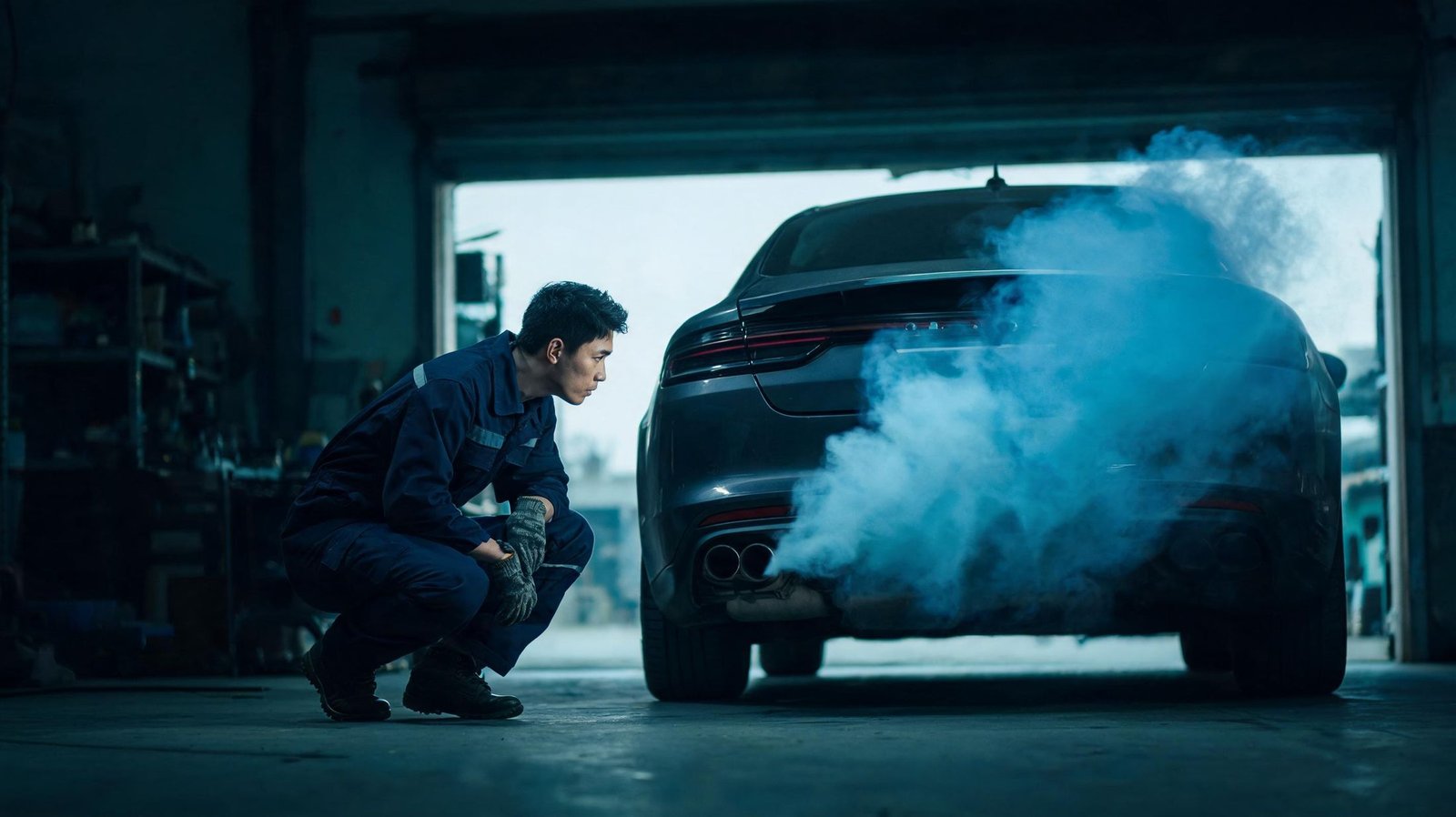
Blue smoke from exhaust means the engine is burning oil. If it appears only on start-up and then clears, the usual causes are worn valve-stem seals or a failing PCV system; if it pours out continuously and gets worse under acceleration, oil is getting past the piston rings or a turbo seal and the engine is heading for replacement.
What does blue smoke actually mean?
Blue smoke is burning engine oil. Unlike white smoke (coolant) or black smoke (excess fuel), the blue tint comes from oil entering the combustion chamber and burning with the fuel.
The colour is your diagnosis before a single tool comes out. White usually means coolant, black means a rich mixture or a diesel under load, and blue means oil. On a diesel, blue can also mean unburnt fuel, but on a petrol engine blue smoke is almost always oil.
In the workshop, we look at three things: when the smoke appears, how heavy it is, and how fast the oil level is dropping. Those three answers usually identify the fault before the engine is opened. How fast the level drops is a question with its own guide — our normal oil consumption explainer walks through the measurement log and the thresholds that tell ‘thirsty’ from ‘worn’.
- Blue = burning oil
- White (sweet smell, coolant loss) = head gasket, cracked head or EGR cooler
- Black = too much fuel or a restriction in the air path
- Grey-blue haze on a diesel at idle = often injector or turbo related
Is blue smoke the same as white or black smoke?
No — the colour is the clue. Blue smoke is oil burning, white smoke that continues when warm is coolant, and black smoke is too much fuel. Getting the colour right sends you to the right system before you spend anything.
Blue smoke (this guide) is oil reaching the combustion chamber — valve guides, rings or a turbo seal. White smoke that keeps coming once the engine is warm points to coolant, usually a head gasket or cracked casting — covered in detail in our guide to white smoke and coolant loss — while thin white vapour on a cold morning is just condensation and burns off. Black smoke is unburned fuel from a rich mixture, a leaking injector or a boost fault.
This code of colours shows up on every platform — the difference is what sits on top. Take the A25A-FKS 2.5L in the Toyota Camry and the K20C4 2.0L turbo in the Honda Accord: same blue plume, completely different leak paths. If consumption has pushed you toward replacement, we supply a used Toyota Camry engine for sale and a reconditioned Honda Accord engine for sale — compression-tested, and run-tested where the unit allows.
- Blue: oil — track the dipstick trend and check the turbo, PCV and valve guides.
- White: coolant — pressure-test the system before assuming the worst, then check the dipstick for coolant in the oil.
- Black: fuel — injectors, air filter, sensors.
- Suffixes matter: Toyota's A25A-FKS is a Dynamic Force four — not the 2AR-FE it replaced — and Honda's K20C4 is one tune in the K20C family, not the K20C1 used in the Civic Type R.
When does it happen? Start-up, idle or under acceleration
Smoke on start-up that clears within seconds points to valve-stem seals. Smoke while idling for a while points to worn valve guides or the PCV system. Smoke under acceleration and load points to piston rings or a turbocharger oil seal.
This timing test is the most useful thing a driver can do before calling a workshop, and it costs nothing. Cold start: does it puff blue for two or three seconds and then clear? Sit idling for ten minutes after a run, then rev gently: does it smoke? Then drive up a hill under load: does the smoke get heavier the harder the engine works?
| When it smokes | Most likely cause | Typical fix |
|---|---|---|
| First 2–5 seconds after a cold start | Valve-stem seals | Seal replacement — a top-end repair |
| After idling for several minutes | Worn valve guides, blocked PCV, oil sucked through the intake | PCV service or head work |
| Harder acceleration = more smoke | Piston rings or cylinder-bore wear | Engine replacement in most cases |
| Smoke plus a whine under boost | Turbocharger oil seal | Turbo repair or replacement |
| Smoke plus rising oil consumption and low power | Ring and bore wear, possible blow-by | Replacement engine |
What are the common causes of blue exhaust smoke?
The five causes we see most are worn valve-stem seals, a failed PCV valve or blocked breather, worn piston rings and bores, a leaking turbo oil seal, and over-filled engine oil or the wrong oil grade.
Start with the cheap ones. An overfilled sump, the wrong viscosity, or a stuck PCV valve mimics serious problems for very little money. We have seen customers buy an engine they did not need because nobody checked a ten-dollar valve first.
Then move to the mechanical causes. Valve-stem seals harden with heat and age and let oil run down the guides overnight, a pattern we see constantly on higher-mileage Honda and Toyota four-cylinders. Rings and bores wear together, raising crankcase pressure and pushing oil past the rings under load. A turbo seal fails when the bearing housing wears or the oil drain is restricted.
- Check the dipstick first — overfilled oil foams and gets past the rings
- Check the PCV valve and breather hose — a blocked breather pressurises the crankcase
- Confirm the correct oil grade and specification for your engine
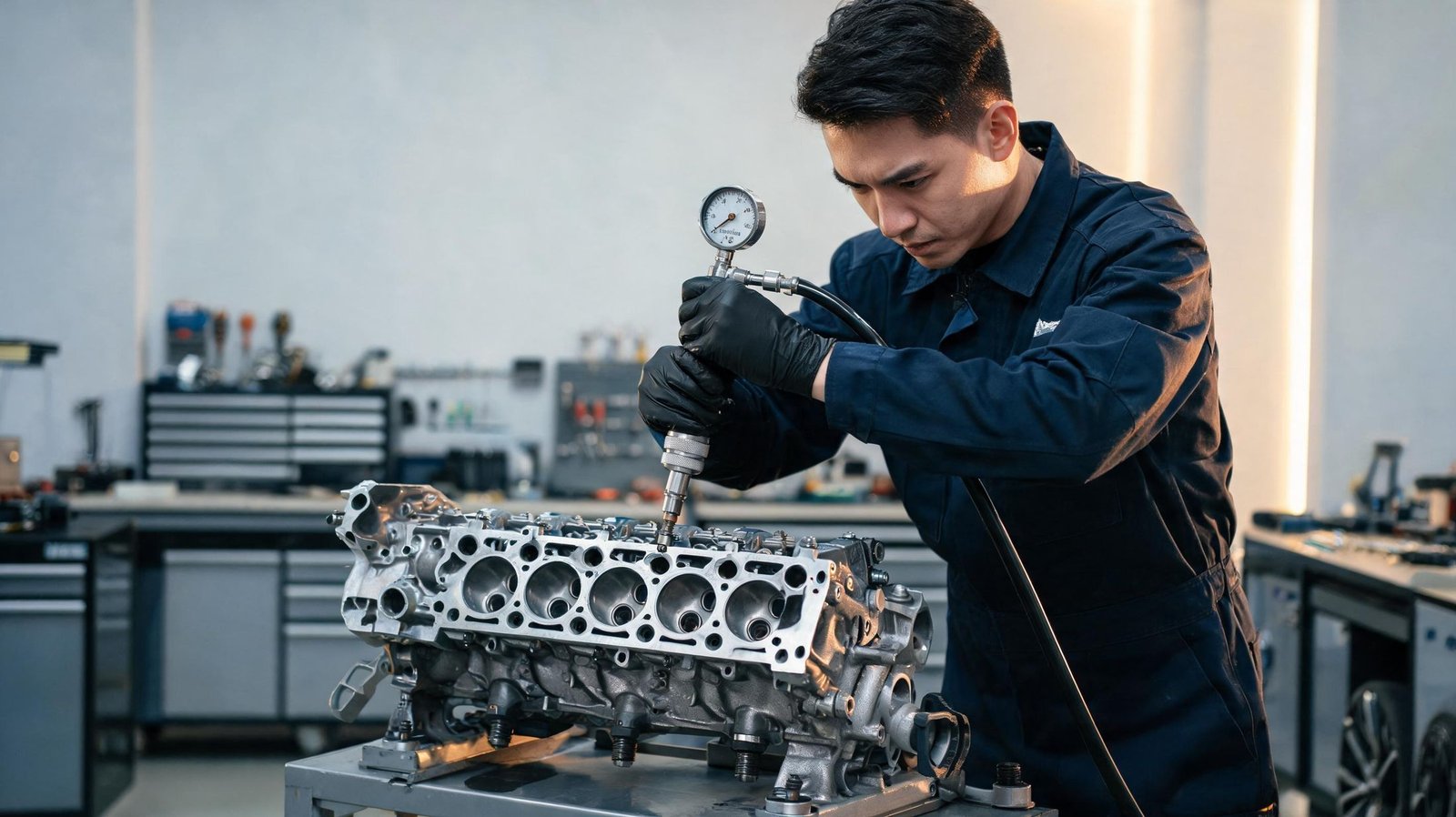
- Have a compression and cylinder-leakage test done before agreeing to any work — then compare your nine price options against the repair quote
- On a turbo engine — the BMW B48 is a good example — have the shaft play and oil drain checked
How much oil consumption is too much?
A rule we use in the trade: up to about one quart per 3,000 miles is tolerable on many engines, and several manufacturers allow more than that in their own handbooks. What matters more is the trend — and any sudden change in consumption is a fault, whatever the handbook says.
Manufacturers vary widely, and some quote much looser numbers in the handbook — up to a quart per 600–1,000 miles on some European engines. That is why we look at trend rather than the absolute figure. If consumption was half a quart between services last year and is now a quart every 800 miles, the engine is failing regardless of what the handbook permits.
Measure it properly: top up to the full mark, note the mileage, and check again at every fuel stop. Do not judge by the smell or the smoke alone — the dipstick is the evidence.
| Consumption | What it usually means | Action |
|---|---|---|
| Under 1 quart per 3,000 miles | Normal for many higher-mileage engines | Monitor at each service |
| 1 quart per 1,500–3,000 miles | Early valve-seal or PCV wear | Diagnose — often still a repair |
| 1 quart per 800–1,500 miles | Ring or bore wear, turbo seal | Plan a replacement |
| 1 quart per 500 miles or less | Serious internal wear | Do not treat topping up as a fix — book an inspection immediately |
Can I keep driving while it smokes?
Light start-up smoke is drivable while you book a diagnosis. Heavy smoke with fast oil consumption should be treated as a failing engine: keep journeys short, check the oil weekly, and be aware that catalytic converters fail quickly when they burn oil.
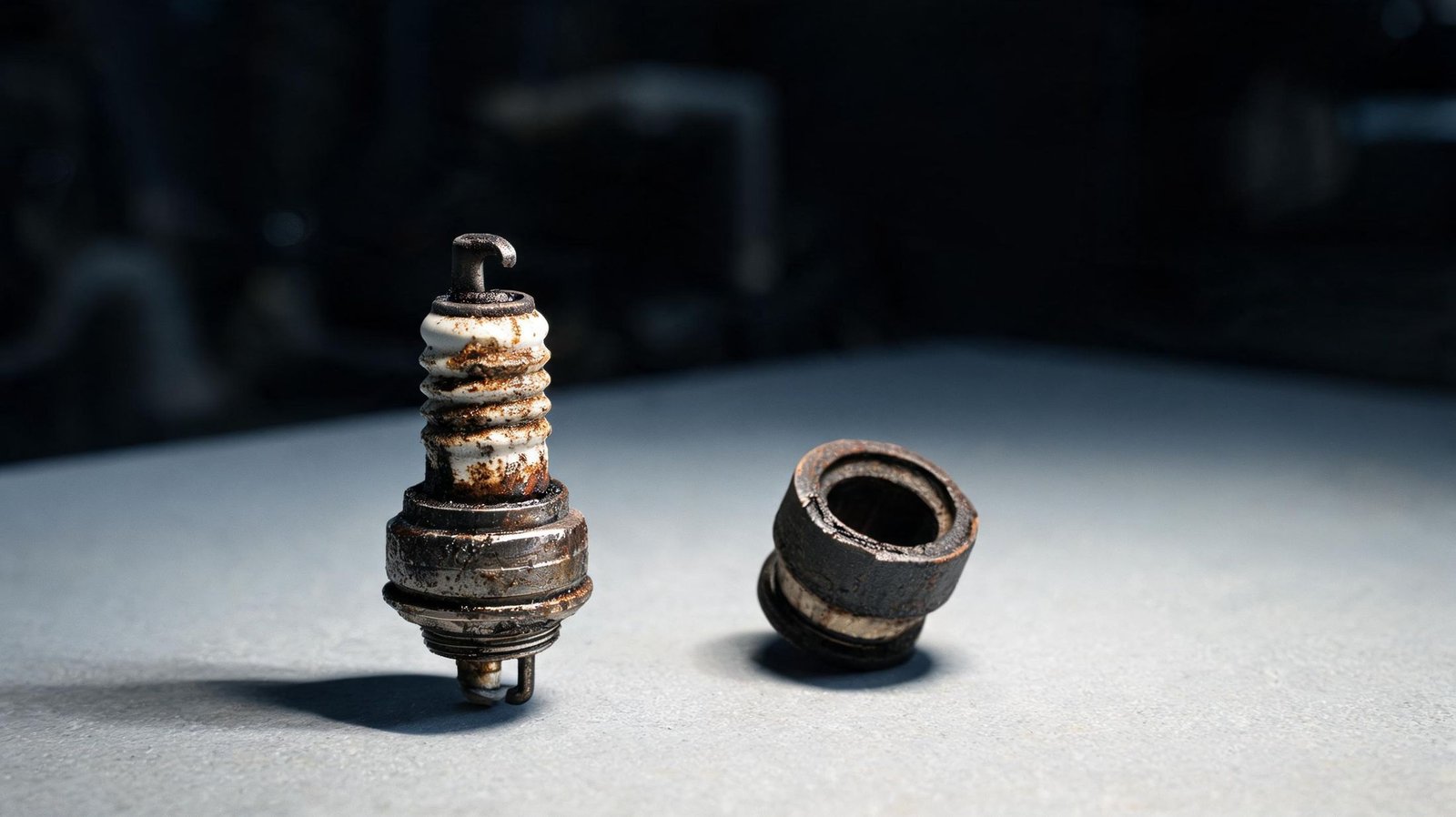
Burning oil does more than smoke. It contaminates the catalytic converter and the oxygen sensors, fouls spark plugs and leaves deposits on the valves and pistons. A converter replacement can cost as much as the repair you were trying to postpone.
If the smoke is accompanied by a knocking noise or the oil-pressure light, stop driving. Oil pressure loss plus blue smoke is the classic pattern of a bottom end that is about to fail.
How do I know whether to repair or replace the engine?
If compression is even and leakage is at the valve seals, repair it. If compression is low on one or more cylinders, or leakage is past the rings, a tested replacement engine is normally the cheaper long-term decision.
We always quote the honest comparison. A valve-seal and head job on a healthy bottom end is worth doing. A ring-and-bore rebuild on a high-mileage block usually costs more than a tested used engine, takes longer, and leaves you with a block whose history you still do not know.
Our customers choose between three warranty tiers — used at 9 months / 6,000 miles, reconditioned at 16 months / 12,000 miles and remanufactured at 36 months / 36,000 miles of warranty cover — and every unit is compression tested and run tested before dispatch, with the engine code matched to your VIN.
Warranty on a replacement runs by tier — 9 months / 6,000 miles on a used unit, 16 months / 12,000 on reconditioned and 36 months / 36,000 on remanufactured, whichever comes first. The full breakdown lives on the warranty page, and claims are decided within 48 hours of a complete file under the claim policy.
- Even compression, leakage at the valves → repair the top end
- Low compression or ring leakage → plan a replacement
- Turbo seal failure → repair the turbo first, then re-assess
- Oil consumption plus converter damage → replace the engine before the converter fails again
| Path | Typical cost | Best for |
|---|---|---|
| PCV valve / breather service | $80 - $250 | Smoke after idling, oily intake |
| Valve-stem seal replacement (head on) | $600 - $1,800 | Cold-start puff that clears |
| Turbo seal / cartridge repair | $900 - $2,200 | Smoke plus boost whine |
| Tested used engine (fitted by your shop) | $900 - $3,500 + labour | Ring wear, high mileage |
| Reconditioned / remanufactured engine | $2,000 - $6,000 + labour | Keepers, work vehicles |
How do I find the right engine for my vehicle before ordering?
Pull your engine code from the block or your VIN, enter it in the fitment lookup, and we confirm the code against your VIN range before any price is quoted.
The lookup on get your price takes the vehicle details and returns nine options — three condition tiers across three warranty lengths — so you compare like for like rather than chasing a single number.
If you are unsure of the code, the engine code index shows where to find it and how it differs between platforms.
- Engine code or VIN in, matched unit out
- Nine options across three tiers and three warranty lengths
- Compression-tested, run-tested where possible
- Free insured freight, USA-wide
What do these terms mean?
Plain-English definitions of the technical terms used in this guide, so you can follow the diagnosis without a workshop dictionary.
Valve Stem Seals — Valve-stem seals stop oil running down the valve guides; when they harden, oil seeps in overnight and burns off as blue smoke in the first seconds after a cold start.
Engine Rebuild — A rebuild means stripping the engine, machining worn surfaces and re-measuring every clearance before reassembly — thorough, but often more expensive than a tested replacement on a high-mileage block.
Where do these figures come from, and where can I verify them?
The price ranges, test procedures and thresholds in this guide follow standard trade practice and the public technical resources below. You can verify the background yourself:
Ranges are typical US independent-workshop figures and our own condition and warranty tiers — treat them as guidance, not a quote for your vehicle. A2Z Engines is the trading brand of QB AUTOZ LLC, a Mississippi-registered supplier — the company record is on our about page.
- API Engine Oil Matters — oil specification, viscosity and what happens when oil enters the combustion chamber.
- EPA vehicle and fuel emissions testing — how oil burning affects emissions and why it can fail a test.
- FuelEconomy.gov — official fuel economy and emissions data for every model year.
Which related guides should I read next?
These are the guides we hand to customers at the end of this conversation — each one picks up a thread from this post and finishes it.
- How Much Oil Consumption Is Normal? — measure the burn that is making the smoke.
- Why Is There Coolant in My Oil? — when the fluid story runs the other way.
- Why Is My Engine Knocking When Accelerating? — the noise that sometimes follows oil loss.
- Explore the site: shop by make · engine code index · used engines · transmissions — every unit fitment-checked before dispatch.
- Ready for numbers? Get your price — nine options across three condition tiers — or search the full catalogue; more guides live on the blog index.
Frequently asked questions
Is blue smoke always bad?
Yes — it means oil is being burned. It may be a cheap fix like a PCV valve or overfilled oil, but it always needs diagnosing. If consumption has passed the point where a rebuild makes sense, that comparison is the next step.
Why does my car only smoke blue on start-up?
That pattern points to valve-stem seals: oil seeps past the seals overnight and burns off in the first few seconds after start-up.
Can I fix blue smoke with an additive?
Seal-conditioner additives can soften hardened seals slightly, but they do not fix worn rings, bores or a turbo seal, and they are not a repair.
How much oil consumption is acceptable?
Up to roughly one quart per 3,000 miles is tolerable on many engines. More than one quart per 1,000 miles is a fault and usually a replacement decision.
Will blue smoke fail an emissions test?
Very likely. Burning oil raises hydrocarbon emissions and degrades the catalytic converter, so a smoking engine frequently fails the test — check your engine code before booking a retest.
Does a used engine come with a warranty against oil burning?
Yes. Every unit we ship carries tiered cover — used engines warranty terms run from 9 months / 6,000 miles on the used tier up to 36 months / 36,000 miles on remanufactured — with a documented warranty claim process.
Check your fitment and see nine price options
Enter your VIN or engine code — we match the unit to your vehicle before any price is shown. Nine options means three condition tiers across three warranty lengths.
Get my price Call +1 (662) 452-4928