
White Smoke and Coolant Loss: Is It a Head Gasket?
Top summary answer
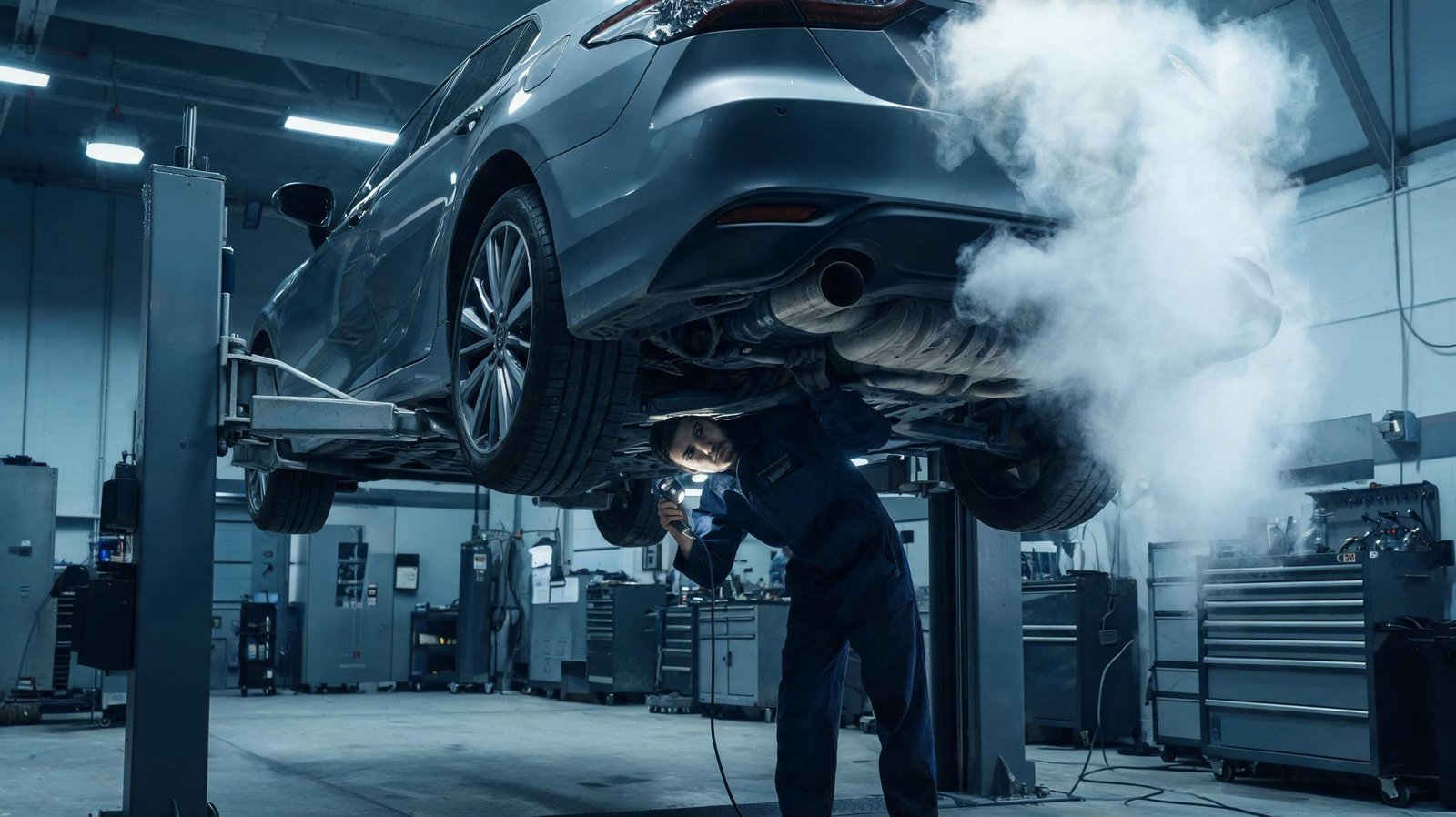
White smoke from exhaust with coolant loss and no visible leak is the classic head-gasket signature, but the same symptoms come from a cracked head, a failed EGR cooler or a warped deck. A combustion-gas test in the coolant bottle tells you which one you have in about ten minutes.
What does white smoke from the exhaust mean?
Thin white vapour on a cold morning is normal condensation. Thick, sweet-smelling white smoke that stays after the engine is warm means coolant is entering the combustion chamber and leaving through the exhaust.
The smell is the giveaway. Coolant burns sweet and leaves a film on the windscreen and a white residue around the tailpipe. Condensation vapour has no smell and disappears within a minute or two of running.
If the coolant level in the expansion bottle is dropping with no puddle under the car, you are losing coolant inside the engine — and white smoke confirms where it is going.
- Thin vapour that stops within 1–2 minutes = normal condensation
- Thick white smoke that continues when warm = coolant burning
- Sweet smell and white tailpipe residue = coolant
- Coolant level dropping with no external leak = internal loss
Is white smoke always a head gasket?
No — but the head gasket is the first suspect because it is the most common cause. A cracked head, a failed intake gasket and — on diesels — an EGR cooler produce the same white plume, and the combustion-gas test is what tells them apart.
The impostors to rule out: condensation (thin vapour that disappears once warm), a cracked cylinder head (same symptoms as a gasket, worse news), an intake manifold gasket (coolant drawn into the intake rather than the cylinder), and the EGR cooler on diesel engines, which can leak coolant straight into the exhaust stream.
The diagnosis path is the same on every platform, but the disassembly is not. Compare the FB25 2.5L in the Subaru Forester with the EcoBoost 2.0 in the Ford Escape: different cooling layouts, same combustion-gas test first. If the test confirms an internal leak and the block has high mileage, we supply a used Subaru Forester engine for sale and a reconditioned Ford Escape engine for sale — often a cleaner answer than a rebuild.
- Name the family, not just the size: Subaru's FB25 is the FB-series 2.5 boxer — not interchangeable with the earlier EJ25 — and Ford's EcoBoost 2.0 is a different engine from the 2.3 and 3.5 EcoBoost units.
How do I confirm it is a head gasket?
Do a combustion-gas (block) test on the coolant bottle, check for bubbles while the engine runs, and pressure-test the cooling system. All three take about ten minutes together and cost far less than removing a cylinder head on a guess.
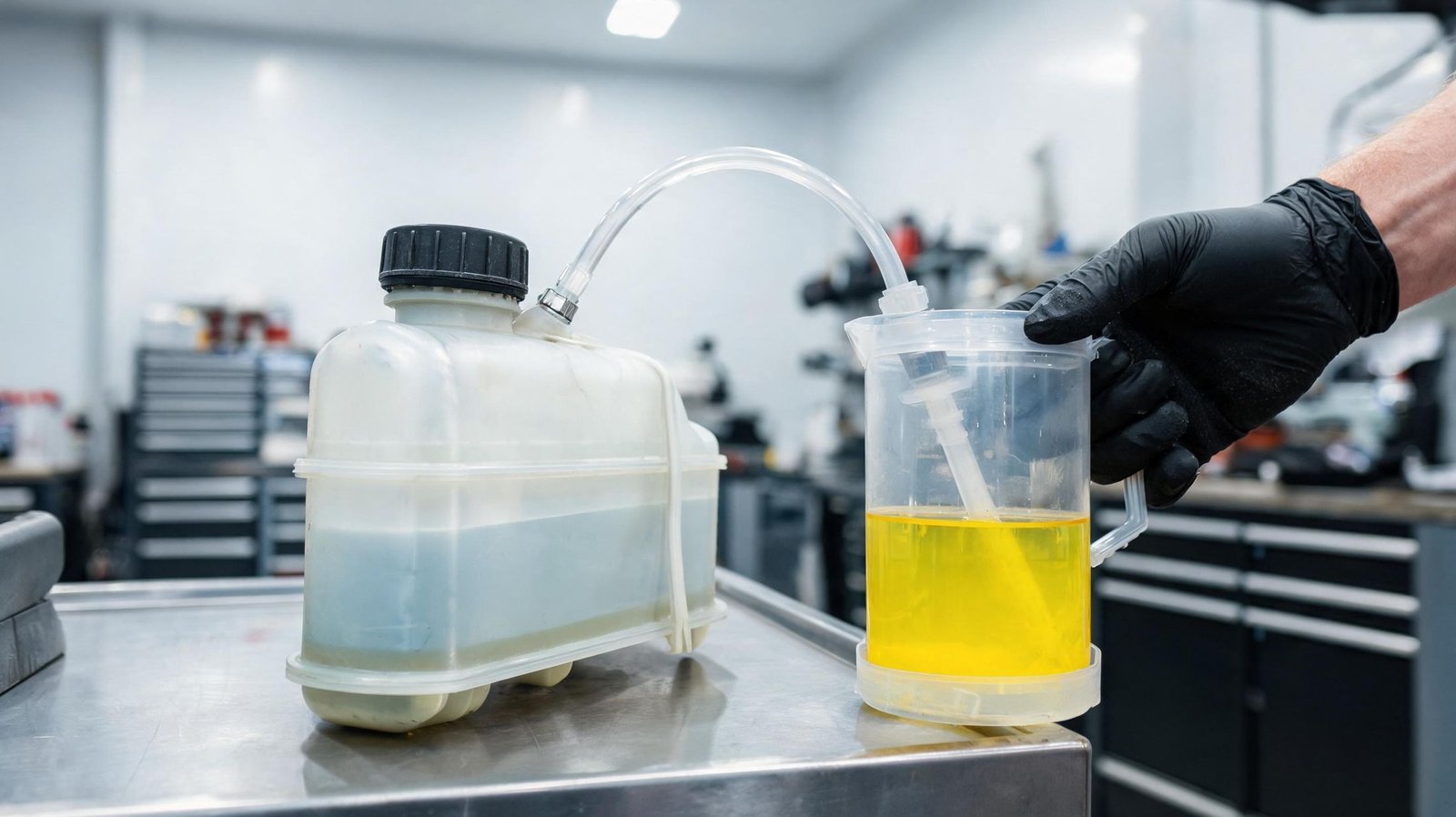
The block test draws air from the coolant bottle through a fluid that changes colour when it detects combustion gases. If the fluid turns yellow, combustion gases are getting into the cooling system and the head gasket, head or deck is the reason.
Bubbles rising steadily in the expansion bottle while the engine idles is the low-tech version of the same test and is almost as reliable. A cooling-system pressure test then shows whether the leak is internal or whether you simply have a hose or radiator leak you have not found yet.
- Top up and pressure-test the cooling system — rule out an external leak first
- Run the engine and watch for steady bubbles in the expansion bottle through its side — with the cap left on. Never remove the cap while the system is pressurised — pressurised coolant can flash to steam and cause serious burns; let the engine cool for at least an hour first.
- Carry out a combustion-gas test on the coolant
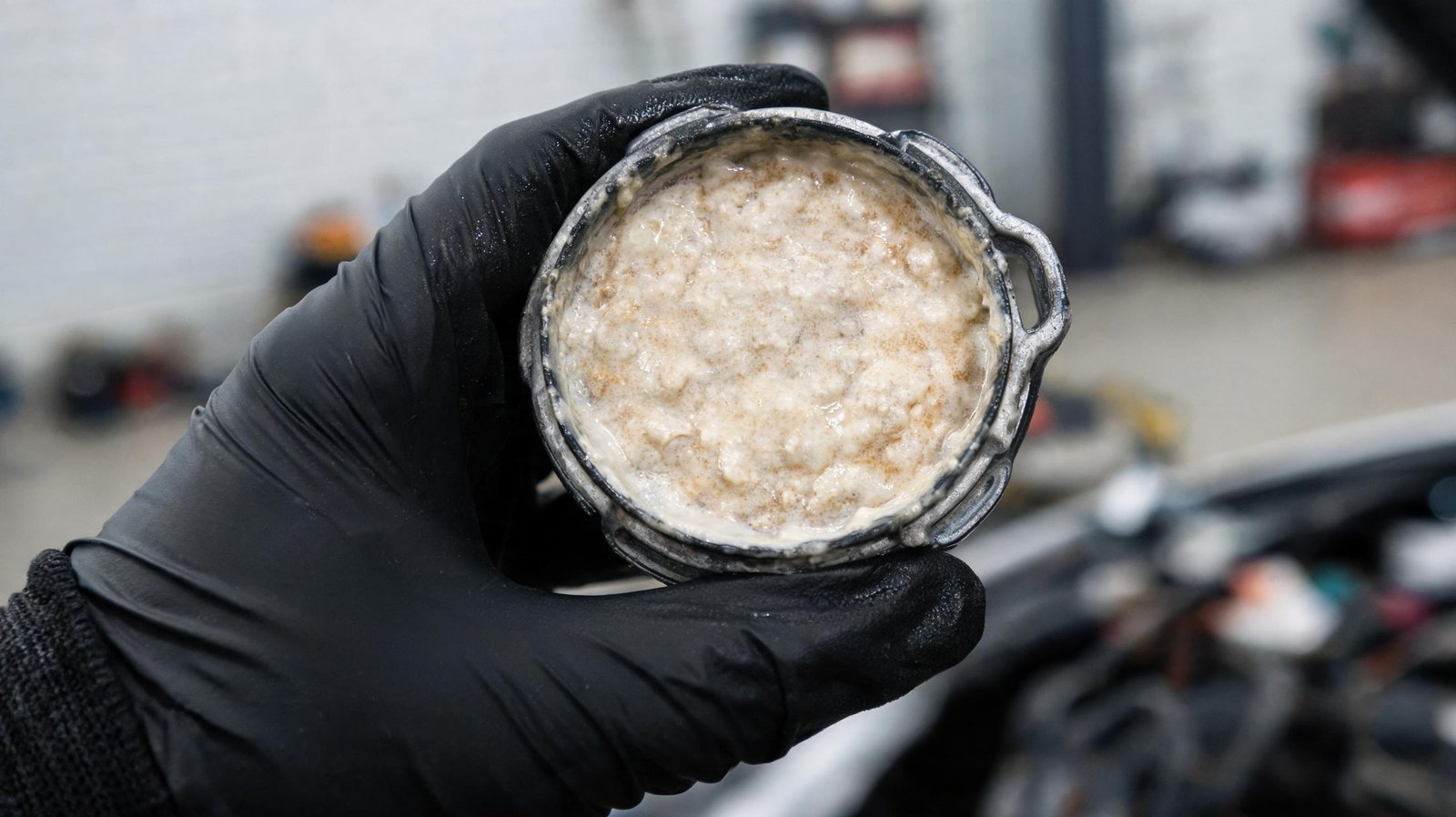
- Check the oil for coolant contamination (milky film) and the transmission fluid if the radiator shares a cooler
- If all signs point inward, remove the head and inspect the gasket and the deck for warping
What else causes white smoke and coolant loss?
A cracked cylinder head, a warped block deck, a failed EGR cooler on some diesels, a porous head casting and even a leaking intake-manifold gasket can produce the same symptoms as a head gasket.
This is the part that matters for your wallet. On many modern engines — the BMW B48 is a familiar example in our workshop — the head gasket fails because something else warped it — usually an overheating event caused by a failed thermostat, water pump, radiator fan or a slow coolant leak nobody noticed. That same cooling-system chain is why a freshly replaced engine can overheat within minutes — our post-replacement overheating guide walks through the bleed-and-check sequence.
If the head or block deck has warped, replacing the gasket alone is a short-term fix. We have seen customers pay twice: once for a gasket job that failed again in a month, and then for a replacement engine.
| Cause | Distinguishing sign | Usual outcome |
|---|---|---|
| Head gasket failure | Combustion gases in coolant, bubbles in the bottle | Gasket and head job; engine replacement if overheated badly |
| Cracked head | Coolant in the oil, misfire on one cylinder, white smoke on one bank | Head replacement; often uneconomical versus a used engine |
| Warped block deck | Gasket replaced and failed again quickly | Replacement engine |
| EGR cooler failure (diesel) | Coolant loss with white smoke and no cylinder misfire | Cooler replacement — no engine work |
| Intake or manifold gasket leak | Coolant loss without combustion gases in the bottle | Gasket replacement |
Can a head gasket be replaced, or is a new engine cheaper?
On a healthy, pre-overheat engine a head-gasket job is often worth doing. Once the engine has been cooked — warped deck, coolant in the oil, bottom-end damage — a tested used or remanufactured engine is usually the cheaper and more reliable path.
We ask two questions before quoting. Has this engine been overheated? And is there coolant in the oil? If the answer to either is yes, we price a replacement alongside the gasket job so the customer compares both honestly.
Our customers then choose between warranty tiers: used at 9 months / 6,000 miles, whichever comes first, reconditioned at 16 months / 12,000 miles, whichever comes first, and remanufactured at 36 months / 36,000 miles, whichever comes first — all with the engine code verified against the VIN before dispatch, and free insured freight USA-wide in 12–16 working days.
| Scenario | Gasket job | Replacement engine |
|---|---|---|
| No overheat, compression even, oil clean | Good option | Not needed |
| Overheated once, deck checked and flat | Usually fine | Consider if mileage is high |
| Warped deck or coolant in oil | Temporary | Recommended |
| Cracked head | Head replacement required | Usually cheaper and warranted |
| Engine already at 150,000+ miles | Pays for gasket work on a tired bottom end | Better value per mile |
Is it safe to drive with a suspected head-gasket failure?
No. Every drive risks more coolant loss and a further overheat, which converts a gasket job into an engine replacement. If the temperature gauge climbs, stop.
The failure escalates quickly. When combustion gases keep entering the cooling system, the coolant boils and pushes out of the bottle, the temperature spikes, the head warps further, and the oil film in the bearings is destroyed.
If you must move the car, do it cold and for the shortest distance. Watch the temperature gauge continuously and carry water for the radiator — and never open the cap while the system is hot. Releasing a pressurised cooling system can cause scalding burns from coolant and steam.
What should I check before buying a used engine for this job?
Confirm the engine code, insist on a compression test and a leak check of the replacement unit, and buy from a supplier that warranties the assembly rather than one that sells from a scrap list.
Head-gasket repairs are the jobs where a bad used engine hurts most, because the customer has usually just spent money on diagnosis and labour. You want a unit that arrives tested, with the code confirmed against your VIN so the intake, manifolds and mounts line up on the first fit.
Ask three questions: what is the engine code, do you have compression results, and what does the warranty cover? If a supplier cannot answer the first one, walk away.
If a replacement is the honest answer, the cover varies by tier: 9 months / 6,000 miles used, 16 months / 12,000 reconditioned, 36 months / 36,000 remanufactured — whichever comes first. Details sit on the warranty page, and every unit is compression-tested and run-tested where the unit allows before it ships.
- Engine code verified against your VIN — not just make, model and year
- Compression results recorded for the unit you are buying
- Cooling ports and head-deck inspected and clean
- Warranty stated in months and miles, in writing
- Free insured freight so transit damage is not your loss
| Path | Typical cost | Best for |
|---|---|---|
| Diagnosis (pressure test + combustion-gas test) | $100 - $250 | Confirming the fault before any work |
| External gasket / hose / EGR cooler repair | $250 - $1,200 | Coolant loss with no combustion gases |
| Head gasket job (head off, skim, new gasket) | $1,800 - $3,500 + labour | No overheat, even compression, clean oil |
| Cracked head replacement | $2,500 - $5,000 + labour | Misfire on one bank plus coolant loss |
| Tested used engine (fitted by your shop) | $900 - $3,500 + labour | Warped deck or coolant in the oil |
| Reconditioned / remanufactured engine | $2,000 - $6,000 + labour | Keepers and work vehicles |
How do I confirm fitment before ordering a replacement engine?
Enter the engine code or VIN into the fitment lookup on the quote page; we verify the code against your vehicle's VIN range before quoting.
Head-gasket jobs are the most common place a buyer orders in a hurry, so the lookup exists for exactly that moment: code in, match confirmed, then nine options across three condition tiers and three warranty lengths.
The engine code index explains where the code sits on the block and why the same model year can carry two different codes.
- Engine code or VIN in, fitment confirmed out
- Nine price options after the fitment check
- Free insured freight USA-wide, 12–16 working days
- 48-hour decision on a complete warranty file
What do these terms mean?
Plain-English definitions of the technical terms used in this guide, so you can follow the diagnosis without a workshop dictionary.
Combustion Gas Test — A combustion-gas test draws vapour from the coolant through a fluid that changes colour if combustion gases are present — the fastest way to prove a head gasket breach.
Coolant Pressure Test — A coolant pressure test pumps the cooling system up to its rated pressure with the engine cold, revealing whether coolant is escaping externally or internally.
Head Machining — Head machining is skimming the cylinder head face flat after an overheat; if the deck is warped beyond the manufacturer’s limit, the head has to be replaced instead.
Where do these figures come from, and where can I verify them?
The price ranges, test procedures and thresholds in this guide follow standard trade practice and the public technical resources below. You can verify the background yourself:
Ranges are typical US independent-workshop figures and our own condition and warranty tiers — treat them as guidance, not a quote for your vehicle. A2Z Engines is the trading brand of QB AUTOZ LLC, a Mississippi-registered supplier — the company record is on our about page.
- Fel-Pro gasket technical resources — how multi-layer steel head gaskets are built and how they fail.
- EPA vehicle and fuel emissions testing — how a failing head gasket shows up in emissions testing.
- ALLDATA repair database — OEM-level cooling system test and repair procedures.
Which related guides should I read next?
These are the guides we hand to customers at the end of this conversation — each one picks up a thread from this post and finishes it.
- Why Is There Coolant in My Oil? — where the milky evidence turns up next.
- Why Does My Engine Overheat After a Replacement? — the cooling chain that ends at the head gasket.
- What Does a P0301 Misfire Code Actually Prove? — misfires that trace back to a failed gasket.
- Explore the site: shop by make · engine code index · used engines · transmissions — every unit fitment-checked before dispatch.
- Ready for numbers? Get your price — nine options across three condition tiers — or search the full catalogue; more guides live on the blog index.
Frequently asked questions
How do I know if it is a head gasket or just condensation?
Condensation stops within a minute or two and has no smell. Head-gasket white smoke continues when the engine is warm, smells sweet and comes with a falling coolant level.
Can I drive with a blown head gasket?
Read the warranty claim policy before any work starts — you can often move the car a short distance cold, but every drive risks a further overheat that turns a gasket job into an engine replacement.
How much does a head gasket replacement cost?
It depends on engine access and whether the head needs machining — our engine code pages show how the same job varies by code. We always quote the gasket job and a replacement engine side by side so the comparison is honest — that is what get your price produces for your vehicle.
Will a head gasket sealer fix it?
Sealers can postpone a small external weep, but they do not fix combustion-gas leakage, a warped deck or a cracked head, and they can block the heater matrix and radiator.
Why did my head gasket fail?
Most commonly an overheating event — a failed thermostat, water pump, fan or a slow coolant leak — rather than the gasket failing on its own. Confirm the engine code before ordering any replacement.
Does a replacement engine carry a warranty?
Yes — the warranty tiers run 9 months / 6,000 miles on used, 16 months / 12,000 miles on reconditioned and 36 months / 36,000 miles on remanufactured units, with the 48-hour claim decision on a complete file.
Check your fitment and see nine price options
Enter your VIN or engine code — we match the unit to your vehicle before any price is shown. Nine options means three condition tiers across three warranty lengths.
Get my price Call +1 (662) 452-4928