Why Does My Engine Overheat After a Replacement?
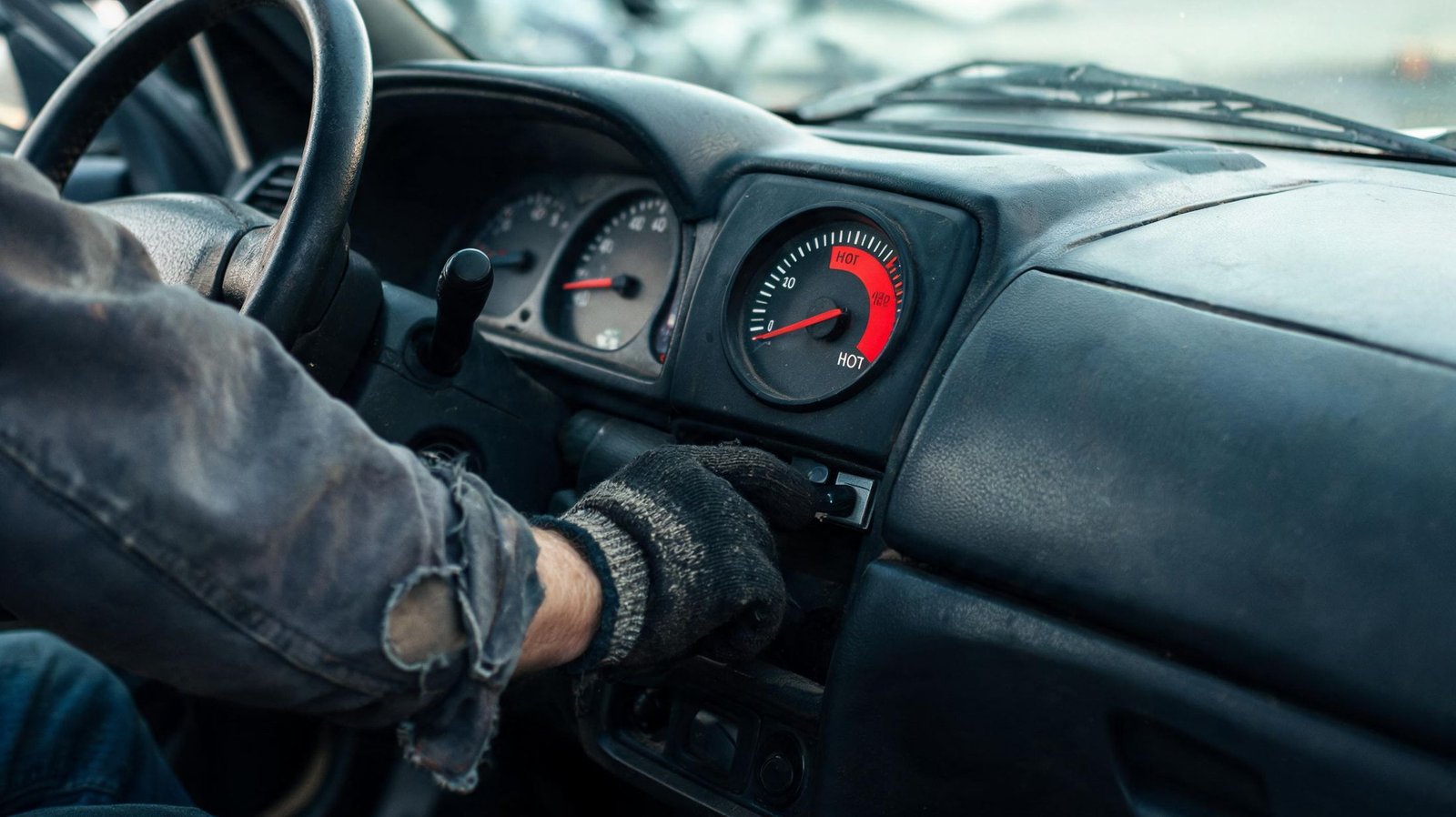
Top summary answer
Engine overheating after replacement is usually an air lock in the cooling system, a thermostat fitted the wrong way round, an unplugged fan, or a radiator that was already blocked before the swap — not a faulty engine. The replacement unit is the last suspect, not the first.
Why is my new engine running hot?
Because the cooling system, not the engine, is almost always the problem: trapped air, a thermostat fitted backwards or stuck shut, an electric fan that was never reconnected, a partially blocked radiator, or a coolant mix that is too weak.
The phone call is understandable — you have just paid for an engine and the gauge is climbing. But the diagnosis sequence is the same whatever the engine's age, and it should start with the simplest checks.
We ask four questions immediately: was the thermostat replaced, was the system bled with the heater on full, does the fan come on when the engine reaches temperature, and was the radiator flow-tested before it was refitted to the new engine?
- Air trapped in the system (most common by a wide margin)
- Thermostat fitted backwards, stuck closed or of the wrong temperature rating
- Electric cooling fan not reconnected, or a blown fan fuse/relay
- Radiator restricted internally — a fault that simply transferred from the old engine
- Weak coolant mixture, or the wrong coolant specification for the engine
- Temperature sender or gauge mismatch (reads hot, engine is fine)
- Water pump not replaced and now failing
Who is this post-replacement overheating guide for?
This guide is for anyone whose fresh engine is running hot: vehicle owners who have just paid for a replacement and are watching the gauge climb, DIY installers working through their first swap, and the independent shops and fleet workshops that need to settle whether the fault is installation or engine — quickly and on the record.
The use case is specific: a replacement engine is in, and the temperature gauge is climbing. Do you keep diagnosing, stop driving and call, or open a warranty claim? That call is the everyday reality of the automotive repair and used-engine trade, and the answer changes completely depending on whether the fault sits on the installation side — which is the overwhelming majority — or inside the replacement unit itself.
The decision context matters just as much: an air lock costs a bleed session, while a genuine internal fault brings the warranty and the 48-hour claim decision into play. The sections below are ordered the way the phone calls actually go — simplest checks first, engine verdict last — so you never spend a radiator's worth of labour proving something a combustion-gas test settles in ten minutes.
If you are an owner, work through the guide in order and stop wherever the job stops being DIY. If you run a shop or a fleet, treat the bleed procedure and the cost table as your comeback checklist and your quoting sheet.
- Vehicle owners whose replacement engine is running hot — before spending on parts
- DIY installers running their first cooling-system bleed
- Independent shops isolating an installation fault from a unit fault
- Fleet workshops protecting uptime — and the paperwork if a claim is needed
What is an air lock and why does it happen?
An air lock is a pocket of air trapped at a high point in the cooling system, usually at the thermostat housing or heater matrix. The air cannot escape, coolant cannot circulate past it, and the engine overheats within minutes even though the radiator is full.
Every replacement engine leaves one behind, because the block, head and heater matrix all drain while the unit is out. If the system is filled quickly and the thermostat never opens, that air stays trapped and the temperature climbs the moment the car is driven.
The symptoms are distinctive: the gauge climbs quickly, the radiator feels cool or patchy, the heater blows cold even when the engine is hot, and the top hose can stay hard or cold while the bottom hose is hot.
| Symptom | Air lock | Mechanical cooling fault |
|---|---|---|
| Overheats within minutes of starting | Very common | Possible |
| Heater blows cold while the engine is hot | Classic sign | Less common |
| Radiator cool or patchy while the gauge is hot | Common | Radiator may be blocked |
| Fan running but engine still hot | Points to air or flow | Points to radiator or pump |
| Overheats only at speed, fine at idle | Less common | Airflow or radiator problem |
Did the replacement engine fail, or is this an installation fault?
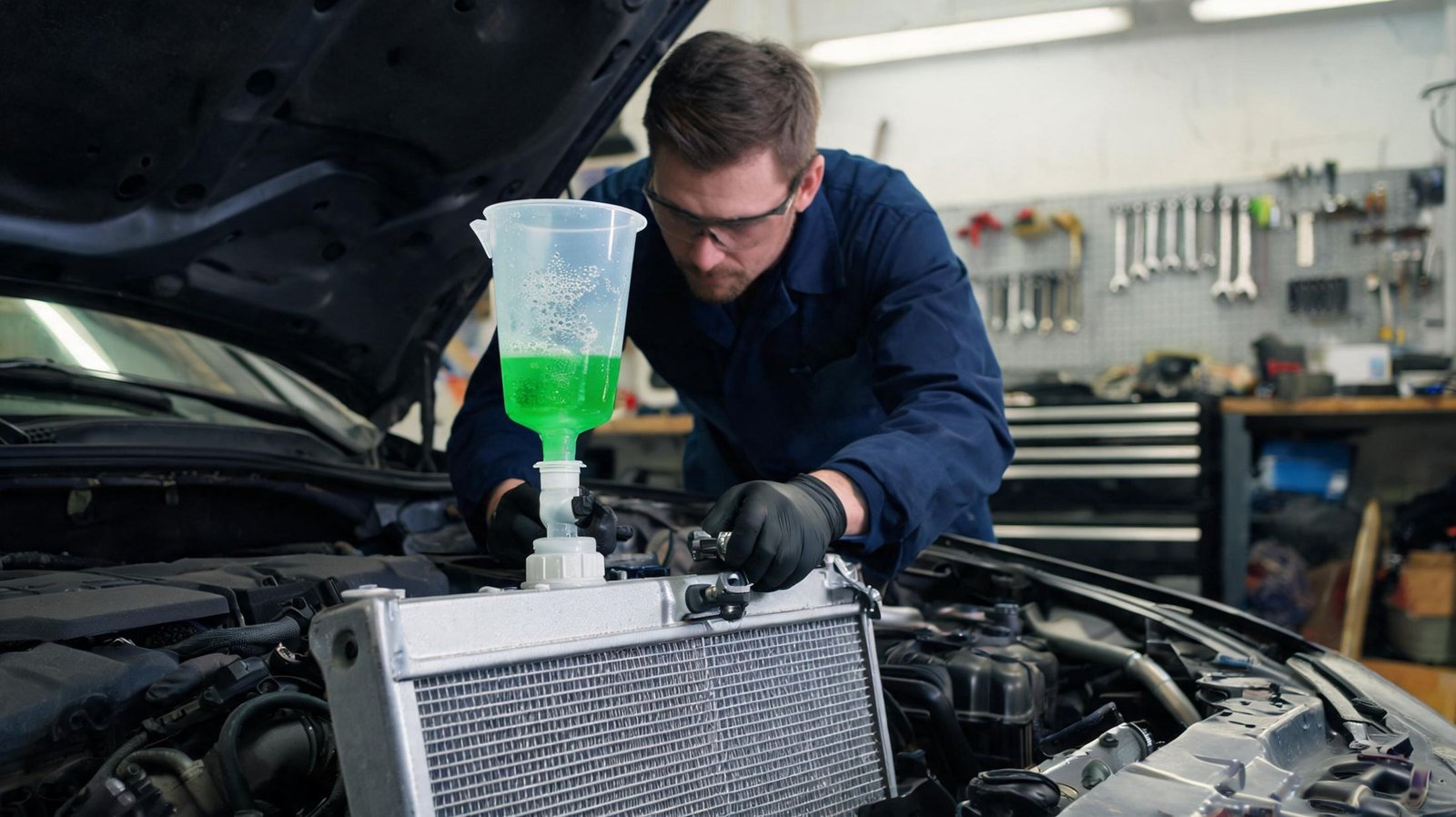
On a fresh swap, overheating is almost always on the installation side — trapped air, a reversed thermostat, an unplugged fan, a blocked radiator or a wiring fault. The replacement engine itself is the last suspect, not the first.
Ranked by how often they cause post-swap overheating: trapped air (the system was never properly bled), a thermostat fitted the wrong way round or with the wrong temperature rating, a cooling fan that was never reconnected, a radiator or heater matrix that was already blocked before the swap, and a head gasket fault on the replacement unit — the one you check last, with the combustion-gas test — our white-smoke and coolant-loss guide shows how that pattern reads on the road.
Two turbo platforms where the bleeding procedure is not optional: the B48 2.0L in the BMW 3 Series and the EA888 2.0L in the Audi A4. Both are supplied by us as used BMW 3 Series engine for sale and reconditioned Audi A4 engine for sale units that leave the bench compression-tested.
- Generations matter more than the badge: BMW's B48 replaced the earlier N20 family — treat them as different engines — and VW's EA888 spans several generations that do not freely interchange.
Which installation mistakes cause post-swap overheating?
The five we see most: reusing the old thermostat and water pump, fitting the thermostat inverted, filling the system without bleeding, reconnecting the fan incorrectly, and refitting a radiator that was already restricted before the swap.
Every one of these costs far less to prevent than to diagnose after the fact, which is why we recommend replacing the thermostat and water pump at the same time as the engine. Both are inexpensive parts while the system is already open.
The radiator deserves special attention. On higher-mileage vehicles, the radiator that cooked the original engine is often already partially blocked. Refitting it to a fresh engine is the fastest way to damage the replacement.
- Thermostat and water pump should be new with the engine — not reused
- Thermostat must sit with its bleed valve (jiggle pin) at the top
- Coolant must be mixed to the correct concentration for your climate
- Heater must be set to full hot while filling and bleeding
- Fan circuit should be tested straight after the first warm-up cycle
How do I bleed the cooling system properly?
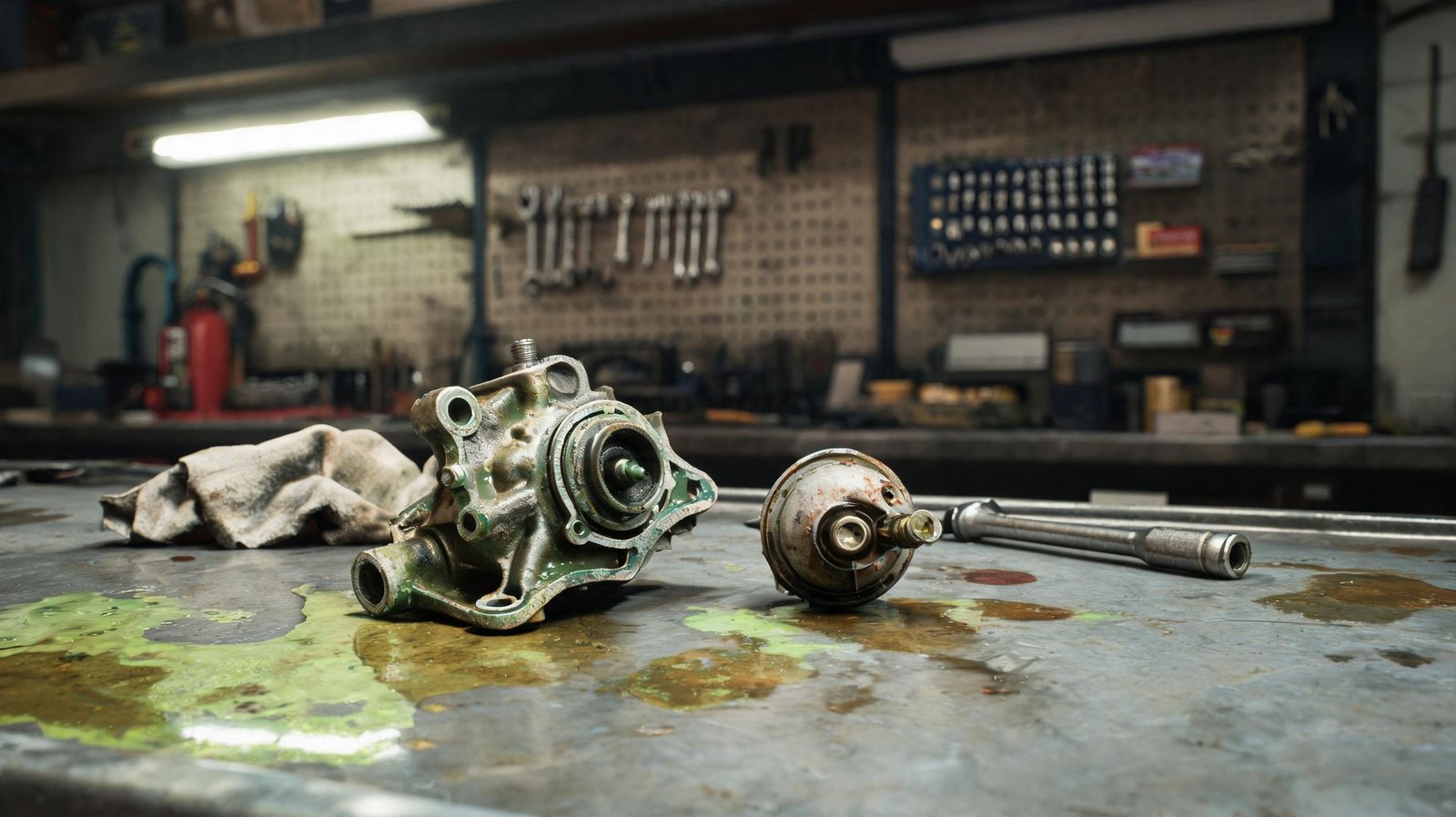
Fill slowly with the heater on full hot, run the engine with the cap off until the thermostat opens, add coolant as the level drops, then cap it and let it cool before checking the level again — repeating until the level stays put.
On many modern engines there are dedicated bleed screws on the thermostat housing or heater hose; on others the system needs vacuum filling. If your platform has a bleed screw, use it — it is far quicker than waiting for the thermostat to cycle air out.
Safety first: the engine is hot during this procedure, and a pressurised system can release scalding coolant and steam. Use a bleed funnel and gloves, never open a cap on a hot pressurised system, and allow at least an hour of cooling before removing the cap on a hot engine.
- Engine cold: fill slowly with the heater set to full hot and the bleed screw open if fitted
- Run to operating temperature with the cap off (or with the bleed funnel attached) until the thermostat opens
- Top up as the level drops, close the bleed screw when a steady stream of coolant appears
- Cap the system, run until the fan cycles, then let it cool completely
- Recheck the level cold and repeat if it drops — two or three cycles is normal on some engines
Could the replacement engine itself be faulty?
It can happen, but it is the last explanation to reach, not the first. A compression fault, a cracked casting or a head gasket fault on the replacement unit would show as combustion gases in the coolant, coolant loss with no external leak, or a misfire alongside the heat.
This is exactly why we insist on a combustion-gas test before anyone condemns a replacement: it separates an installation problem from an engine problem in ten minutes. The same evidence-first logic applies to a misfire code or milky oil: observations before conclusions.
If the evidence does point at the unit, the warranty process exists for it. Our claim protocol requires an order number, VIN, mileage at install and breakdown, and a compression test from a certified workshop — and then issues a written decision within 48 hours of a complete file.
| Finding | Conclusion | Action |
|---|---|---|
| Air escapes after bleeding, temperature normal | Installation (air lock) | No further work |
| Combustion gases in the coolant | Engine or gasket fault | Open a warranty claim with a compression test |
| Coolant loss with no external leak | Internal breach | Claim — pressure and gas tests attached |
| Fan never comes on | Electrical fault | Repair the fan circuit |
| Radiator restricted on flow test | Transferred old fault | Replace the radiator |
What does it cost to put this right?
A bleed and diagnostic session is typically $80–$200. A thermostat and water pump fitted run about $350–$900. A radiator replacement is $300–$1,000 depending on the vehicle. None of these are engine costs.
If the diagnosis lands on the replacement unit itself, the repair is covered by the warranty rather than your wallet — which is why the documented claim path matters.
It is also why we ask customers to keep the installation invoice. A claim without proof that a qualified workshop installed the unit is much harder to settle fairly for either side.
| Job | Typical cost | Typically needed? |
|---|---|---|
| Bleed + diagnostic session | $80 – $200 | Yes, most cases |
| Thermostat and water pump | $350 – $900 | Strongly recommended with the engine |
| Radiator replacement | $300 – $1,000 | If the original was restricted |
| Fan circuit repair | $120 – $500 | If the fan is not running |
| Engine replacement (warranty) | Covered by tier | Only if the unit itself has failed |
Which units do we supply if the engine really has failed?
Used, reconditioned and remanufactured engines, matched to your engine code and verified against your VIN before dispatch, with free insured freight USA-wide in 12–16 working days.
When a second unit is genuinely required, the platform decides it. We supply a used Ford F-150 engine for sale and a reconditioned Ford F-150 engine for sale on the truck side, and a B48 for sale for BMW applications where a failed thermostat has cooked the head.
An overheat event rarely leaves the transmission untouched either — fluid degradation shows up as harsh shifts weeks later. We supply a used Ford F-150 transmission for sale and a reconditioned Ford F-150 transmission for sale, plus common units such as a 4L60E transmission for sale, on the same fitment check.
- Used engines — 9 months / 6,000 miles, whichever comes first
- Reconditioned engines — 16 months / 12,000 miles
- Remanufactured engines — 36 months / 36,000 miles
- Transmissions matched by code alongside the engine
- Every unit compression-tested before dispatch
What does A2Z Engines check when a post-swap overheat call comes in?
The same ladder every time: how the system was filled and bled, the thermostat orientation and rating, the fan circuit and radiator flow — and only then a combustion-gas test to rule the engine itself in or out. On the calls we take, the unit is the last suspect, not the first.
Post-swap overheat calls reach us two ways: an owner whose car is hot in the driveway, or an installer who has already re-bled the system twice and is losing patience. Either way the desk works the same sequence — cheapest checks first, engine verdict last — because that is how the causes rank in practice.
The textbook case on this side of the counter: a fresh B48 or EA888 swap that “overheats in ten minutes” turns out to be an air lock at the thermostat housing — the fill-and-bleed was rushed with the heater dialled cold. We walk the installer through the bleed cycle before a claim form is even mentioned; when the combustion-gas test comes back clean, that usually closes the case. When it does not, the unit's recorded compression results and the 48-hour claim decision take over.
Either way the file matters: install invoice, mileage at install, the bleed method used, and the test results. It is the same paperwork our claims team asks for — and the same reason every engine we ship leaves the bench compression-tested.
- Who installed the unit, and how the system was filled — cap-off cycles, vacuum fill, or a bleed screw
- Bleed review: heater full hot, thermostat opened, level rechecked cold over two or three cycles
- Thermostat and water pump: new parts with the engine, jiggle pin up, correct temperature rating
- Fan circuit and radiator flow tested on the first warm-up — not assumed from the donor car
- Combustion-gas test before any engine verdict — recorded compression numbers and the claim file if the unit is genuinely at fault
How do I confirm fitment before ordering?
Enter the VIN or engine code in the fitment lookup on the quote page; it returns nine options across three condition tiers and three warranty lengths, and a specialist confirms the code against your VIN range before dispatch.
If the block stamping is unreadable, decode the VIN first with the NHTSA VIN decoder — the engine code index shows where to look on the common platforms.
- VIN or engine code in → matched unit out
- Nine options = 3 condition tiers × 3 warranty lengths
- Free insured freight USA-wide, 12–16 working days
- 48-hour decision on a complete warranty file
What do these terms mean?
Plain-English definitions of the technical terms used in this guide, so you can follow the diagnosis without a workshop dictionary.
Coolant Bleed — Coolant bleeding is the process of releasing trapped air from the cooling system through bleed screws or a funnel kit until only coolant flows.
Air Lock — An air lock is a trapped pocket of air at a high point in the cooling system, usually at the thermostat housing; coolant cannot circulate past it, so the engine overheats even with a full radiator.
Combustion-Gas Test — A combustion-gas (block) test draws vapour from the cooling system through a fluid that changes colour if exhaust gases are present — a positive result points at an internal breach such as a head gasket, while a clean result points back at the installation.
Temperature Gauge — The temperature gauge reads coolant temperature at the sender; a gauge that climbs within minutes of a cold start points at air in the system rather than a failed engine.
Where do these figures come from, and where can I verify them?
The price ranges, test procedures and thresholds in this guide follow standard trade practice and the public technical resources below. You can verify the background yourself:
Ranges are typical US independent-workshop figures and our own condition and warranty tiers — treat them as guidance, not a quote for your vehicle. A2Z Engines is the trading brand of QB AUTOZ LLC, a Mississippi-registered supplier — the company record is on our about page.
- Fel-Pro gasket technical resources — what overheating does to gaskets and sealing surfaces.
- EPA vehicle and fuel emissions testing — how cooling faults surface in emissions testing.
- ALLDATA repair database — OEM bleeding sequences and thermostat procedures.
Which related guides should I read next?
These are the guides we hand to customers at the end of this conversation — each one picks up a thread from this post and finishes it.
- White Smoke and Coolant Loss: Is It a Head Gasket? — gaskets and decks behind the heat.
- Why Is There Coolant in My Oil? — the contamination that follows an overheat.
- How Much Oil Consumption Is Normal? — the other engine fluid worth watching after a swap.
- Explore the site: shop by make · engine code index · used engines · transmissions — every unit fitment-checked before dispatch.
- Ready for numbers? Get your price — nine options across three condition tiers — or search the full catalogue; more guides live on the blog index.
Frequently asked questions
Why is my new engine overheating?
Almost always a cooling-system installation issue: trapped air, a thermostat orientation or rating problem, a fan that was not reconnected, or a radiator that was already restricted before the swap.
How do I get air out of the cooling system?
Fill slowly with the heater on full hot, run to temperature with the cap off or a bleed funnel fitted, top up as the level drops, then cap it and recheck once cold. Repeat if the level falls again.
Can a thermostat cause overheating after an engine swap?
Yes — fitted backwards, stuck shut or with the wrong opening temperature. It is one of the most common causes and one of the cheapest to correct.
Should I replace the water pump with the engine?
Yes. It is inexpensive while the cooling system is already open, and a failing pump on a fresh engine produces exactly the same symptom as a faulty replacement unit.
Could the replacement engine be faulty?
It can happen, but it is the last explanation to reach. A combustion-gas test separates an installation fault from an engine fault in about ten minutes — and our claim protocol covers the unit if it is genuinely at fault.
What does it cost to fix post-swap overheating?
A bleed and diagnostic is $80–$200, a thermostat and water pump fitted is $350–$900, and a radiator is $300–$1,000 — all well below the cost of another engine.
Do you supply transmissions as well?
Yes — used and reconditioned transmissions, including common units such as a 4L60E transmission for sale, on the same fitment check.
What should I know about air lock cooling system?
Air Lock Cooling System is explained in the section above and matters because it changes what the diagnosis and the repair actually involve.
What should I know about thermostat installed backwards?
Thermostat Installed Backwards is explained in the section above and matters because it changes what the diagnosis and the repair actually involve.
What should I know about coolant bleeding procedure?
Coolant Bleeding Procedure is explained in the section above and matters because it changes what the diagnosis and the repair actually involve.
Check your fitment and see nine price options
Enter your VIN or engine code — we match the unit to your vehicle before any price is shown. Nine options means three condition tiers across three warranty lengths.
Get my price Call +1 (662) 452-4928