Why Is There Coolant in My Oil?
Top summary answer
Coolant in the oil means the two systems have found a way to mix. The usual culprits are a failed head gasket, a cracked head or block, a leaking oil cooler, or — on some engines — a warped deck after an overheat. Milky oil is the symptom; the leak path decides whether this is a repair or a replacement.
How do I know the oil is contaminated?
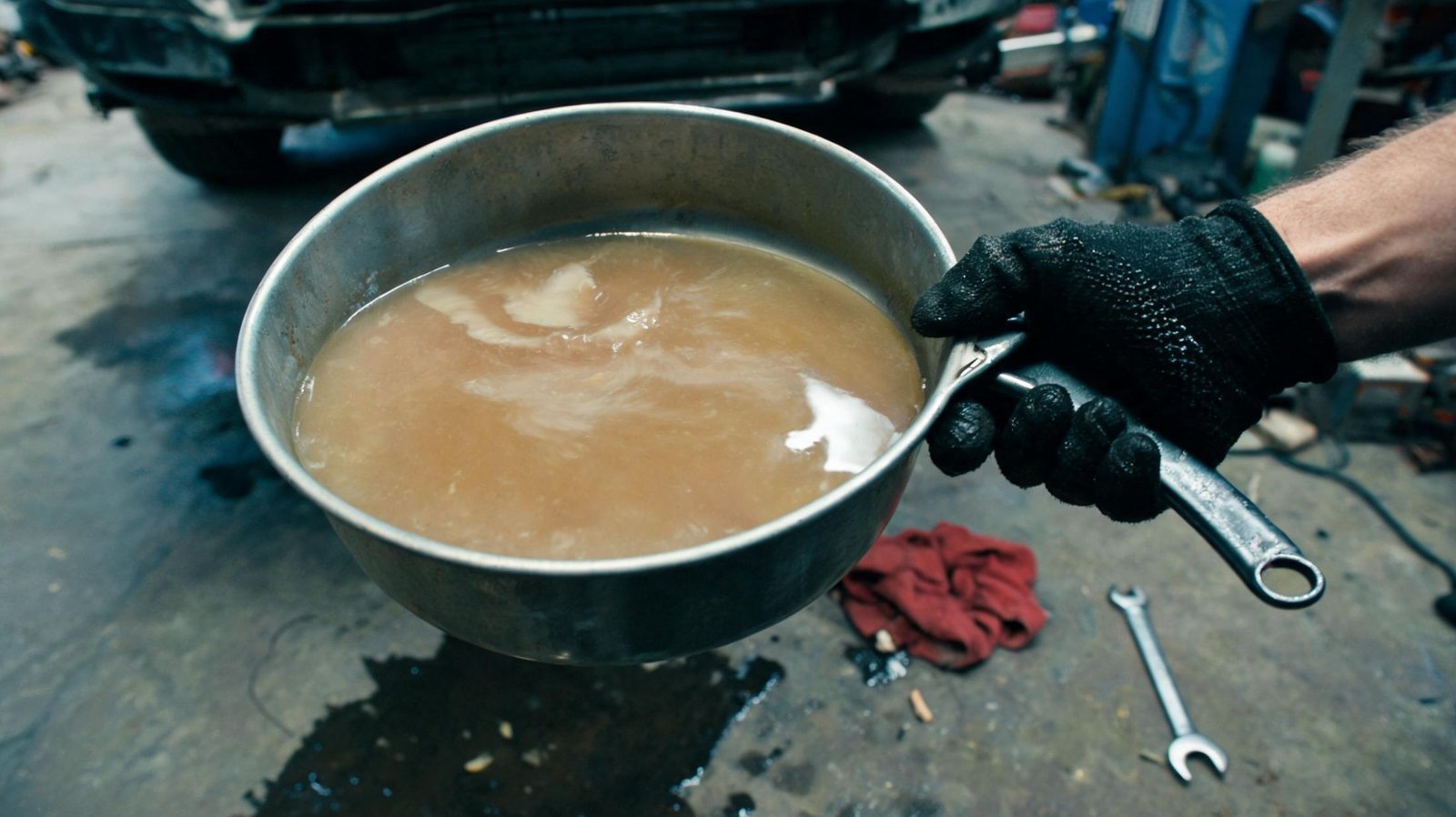
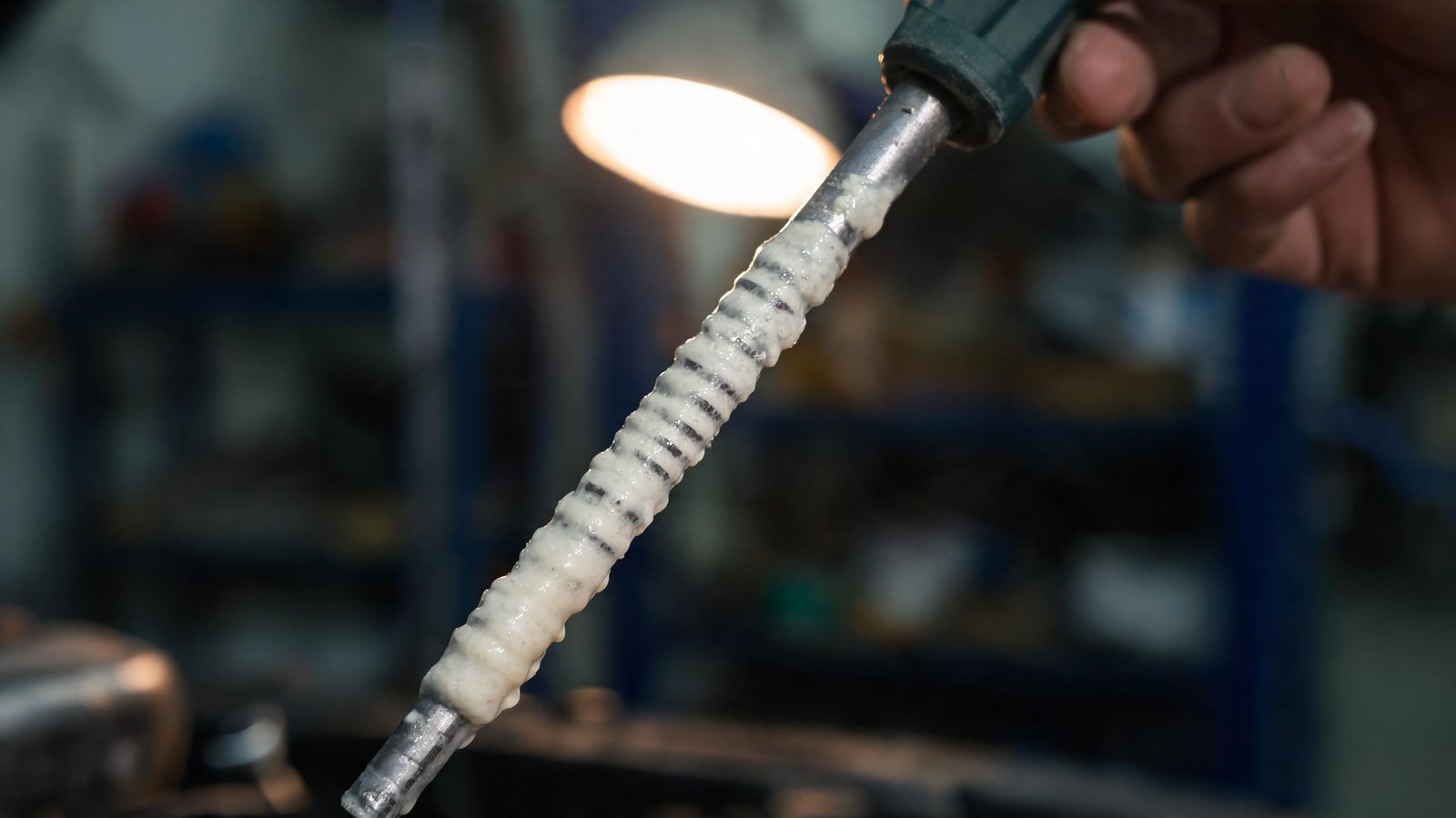
The oil turns milky — a mayonnaise-like film on the filler cap, a tan emulsion on the dipstick, or a rising oil level on the dipstick as coolant drains into the sump. A sweet smell from the oil and unexplained coolant loss complete the picture.
We ask two questions on the phone: does the filler cap have a cream-coloured film under it, and is the coolant level dropping without a puddle on the driveway? When both answers are yes, the oil and coolant are mixing.
A note of caution on the filler cap test: short-trip driving in cold weather can put a little condensation cream on the cap with nothing wrong at all. The dipstick and the coolant level are the evidence that matters — if the oil on the stick is uniformly milky, stop driving.
- Milky or mayonnaise-like film on the filler cap
- Tan emulsion on the dipstick, not just at the tip
- Oil level rising between checks (coolant draining in)
- Sweet smell from the oil or exhaust
- Coolant level dropping with no visible external leak
Who is this coolant-in-oil guide for?
This guide is for the people who have to act when coolant and oil start mixing: vehicle owners weighing a repair against a replacement, DIY mechanics running the first diagnosis, and the independent shops and fleet technicians who quote the job for a customer.
The use case is specific: a vehicle — yours or a customer's — with milky oil on the dipstick and a decision to make. Flush and repair the current engine, or order a tested replacement? That call is the everyday reality of the automotive repair and used-engine trade, and the right answer changes by platform, engine code and condition tier — so every section below is organised around evidence rather than guesswork.
The decision context matters just as much: a head-gasket job on an overheated engine is not always the cheaper path, and a used or reconditioned unit with recorded test results is not automatically the more expensive one. The nine price options — three condition tiers across three warranty lengths — exist so that comparison can be made line by line, in writing.
If you run a shop, treat the leak-path and cost sections as a quoting checklist for the counter. If you are an owner, start at the first section and stop wherever the work stops being DIY territory — the stop-driving warning matters more than any price.
- Vehicle owners deciding between a gasket repair and a replacement engine
- DIY mechanics running the first coolant-in-oil diagnosis at home
- Independent shops building a defensible quote for a customer
- Fleet technicians minimising downtime on a high-use vehicle
What causes coolant to get into the oil?
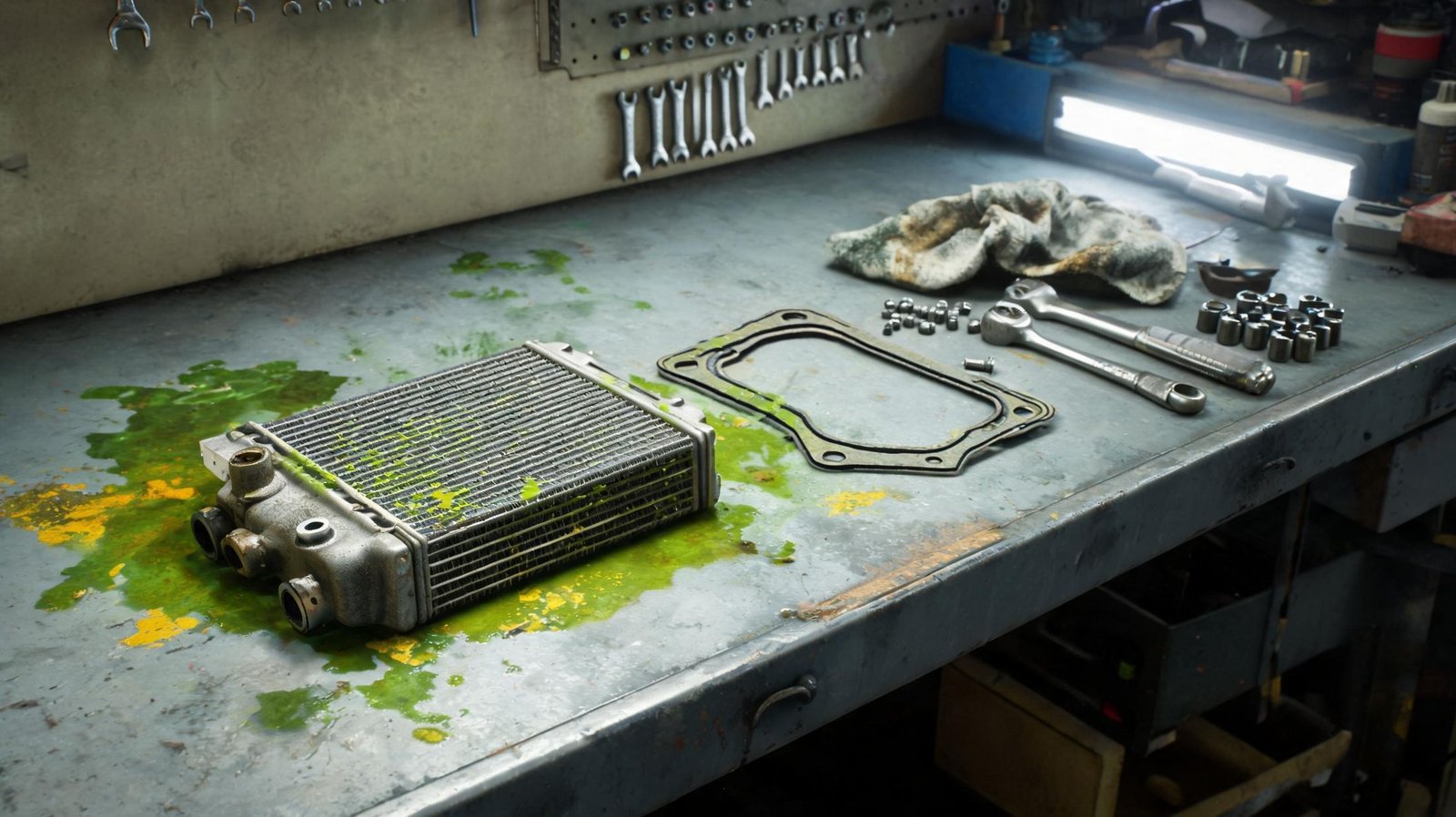
The most common causes are a failed head gasket, a cracked or warped cylinder head, a cracked block, a leaking engine oil cooler, and on some engines a porous casting or a failed intake manifold gasket carrying coolant into the intake tract.
The cause and the cost are not the same thing. An oil cooler is a bolt-on part; a warped deck means the engine has to come out. That is why the leak-path test below matters more than the symptom.
Overheating is the thread that ties most of these together. A failed thermostat, a water pump, a blocked radiator or a slow coolant loss all end in the same place: a deck that has moved and a gasket that can no longer seal. If the engine in question has just been replaced, that chain is exactly what our post-replacement overheating guide exists to break — cheapest checks first.
| Pattern | Most likely leak path | Usual outcome |
|---|---|---|
| Milky oil + white exhaust + misfire | Head gasket or cracked head | Gasket job, or replacement if the deck is warped |
| Milky oil, no misfire, no white smoke | Engine oil cooler | Cooler replacement — the cheap answer |
| Oil level rising, coolant vanishing | Block or timing-cover crack | Replacement engine |
| Coolant loss with rough idle when cold | Intake manifold gasket | Gasket replacement |
Is it coolant in the oil, or oil in the coolant?
Direction matters. Coolant in the oil — a milky dipstick and a rising level — is this guide. Oil in the coolant — an oily film or float in the expansion tank — is a different failure path with a different price tag, and the tests to find each are different too.
Coolant reaches the oil through the head gasket, the intake gasket, an internal oil-cooler rupture or a crack that breaches an oil gallery. Oil reaches the coolant through the head gasket, a turbo bearing housing, or the transmission cooler on automatics. The combustion-gas test and pressure test we describe here separate the paths before anything comes apart.
Platform families where this diagnosis comes up include the Pentastar 3.6 V6 in the Jeep Wrangler and the Hemi 5.7 V8 in the Ram 1500. When repair is no longer the economical answer, we supply a used Jeep Wrangler engine for sale and a reconditioned Ram 1500 engine for sale.
- Shared names hide different parts: the Pentastar family covers 3.2- and 3.6-litre versions that do not share every component — and the Hemi badge spans 5.7, 6.4 and supercharged 6.2 units.
How do I find the leak path?
Pressure-test the cooling system cold, run a combustion-gas test on the coolant, pressure-test the oil cooler separately where fitted, and only then pull the head if the evidence points there.
This order saves money. The cooler test is quick and lets you avoid a head removal entirely on engines where the cooler is the known weak point.
Safety first: never open a radiator cap or pressurised expansion bottle while the engine is warm. Pressurised coolant flashes to steam. Let it cool for at least an hour, then release the cap slowly with a rag over it.
- Cooling-system pressure test, engine cold — find the external leak first if there is one
- Combustion-gas test on the coolant — confirms a breach into the combustion chamber
- Oil-cooler pressure test — isolates the cooler before any head work is quoted
- Cylinder leakage test — shows whether pressure is escaping past a gasket breach
- Head removal only if all the previous tests point inward
Is it always a head gasket?
No. Across the engines we see, roughly a third of coolant-in-oil cases are cooler or gasket faults that do not need the head off, and a further share are cracked castings that cannot be repaired economically at all.
That is why we push for the leak-path test before any quote. A customer who spends three hours on a head job that was never going to fix a cracked block has paid for a diagnosis twice.
The same applies to the engine's history. If the engine has been overheated — even once, briefly — we quote the gasket job and a replacement side by side so the comparison is honest rather than hopeful.
What does it cost — and when is an engine the cheaper answer?
A cooler or external gasket repair typically runs $250–$1,200. A head gasket job runs $1,800–$3,500 plus labour. Where the block or deck is damaged, a tested replacement engine at $900–$3,500 plus labour is usually the cheaper and more reliable path.
Numbers like these are why we publish ranges instead of a single figure — engine access, whether the head needs skimming, and whether the manifolds survive removal all move the total.
If the engine is already consuming oil or has covered high mileage, a rebuild of a worn bottom end costs more than a tested replacement and still carries the original block's history.
| Outcome | Typical cost | When it makes sense |
|---|---|---|
| Cooler or external gasket | $250 – $1,200 | No combustion gases, no misfire |
| Head gasket job (head off, skim, gasket) | $1,800 – $3,500 + labour | Healthy bottom end, no prior overheat |
| Cracked head replacement | $2,500 – $5,000 + labour | Rarely economic on high-mileage units |
| Tested replacement engine | $900 – $3,500 + labour | Warped deck, cracked block or worn rings |
What units do we supply when the engine is beyond repair?
Used, reconditioned and remanufactured engines, matched to your engine code and verified against your VIN before dispatch, with free insured freight USA-wide in 12–16 working days.
Where the engine has mixed its fluids, the transmission usually needs a look too — coolant contamination and hard shifting travel together. We supply transmissions on the same fitment check, including a used Ford F-150 transmission for sale and a reconditioned Ford F-150 transmission for sale, as well as a 4L60E transmission for sale on the GM side.
On the engine side, the platform decides the unit: we supply a used Ford F-150 engine for sale and a reconditioned Ford F-150 engine for sale on the truck side, and a B48 for sale for the BMW applications that commonly arrive with coolant contamination after a thermostat failure.
- Used engines — 9 months / 6,000 miles, whichever comes first
- Reconditioned engines — 16 months / 12,000 miles
- Remanufactured engines — 36 months / 36,000 miles
- Compression-tested, run-tested where the unit allows
- Transmissions matched by code on the same check
What does A2Z Engines check before quoting a replacement engine?
Three things, every case: the VIN and the engine code, the diagnosis results, and what the oil looks like now. From there we price the repair and a tested replacement side by side, and every engine we ship carries recorded compression results and a fitment check against your VIN.
Cases reach us in two ways: an owner part-way through a diagnosis, or a shop that has already pulled the head. On the phone the questions are the same as in the first section — but once a replacement is on the table, the checklist widens.
The textbook case on this side of the counter is the Pentastar 3.6: its oil-cooler housing sits under the intake, and when the seals fail, coolant drains straight into the oil. That single pattern is why our Pentastar units are fitment-matched by VIN rather than by 'any 3.6' — and the B48 plays the same role on the BMW side after a thermostat failure.
Owners and shops both leave with a file: the compression numbers for the unit, the fitment confirmation, and the warranty terms in writing — the same paperwork the 48-hour claim decision is built on. Whatever the case, the sequence we run before any unit is quoted never changes:
- VIN decoded to the engine code — not just make, model and year
- Diagnosis reviewed: combustion-gas result, compression numbers or a leak-down figure, if you have them
- Failure mode confirmed — cooler, gasket or casting — because it decides whether the block is even reusable
- Repair and a tested replacement priced side by side, so the comparison is honest
- For replacements: compression-tested and, where the unit allows, run-tested — with the results recorded for the engine you buy
How do I confirm fitment before ordering?
Enter the VIN or engine code in the fitment lookup on the quote page — it returns nine options across three condition tiers and three warranty lengths, and a specialist confirms the code before dispatch.
If you cannot read the code on the block, decode the VIN first with the NHTSA VIN decoder. The engine code index shows where the stamping sits on the common platforms.
- VIN or engine code in → matched unit out
- Nine options = 3 condition tiers × 3 warranty lengths
- Free insured freight USA-wide, 12–16 working days
- The 48-hour claim decision applies once a file is complete
What do these terms mean?
Plain-English definitions of the technical terms used in this guide, so you can follow the diagnosis without a workshop dictionary.
Oil Gallery — An oil gallery is a drilled passage carrying pressurised oil through the block to the bearings; a crack that breaches a gallery lets coolant into the oil and oil pressure drop.
Combustion Gas Test — A combustion-gas test draws vapour from the coolant through a fluid that changes colour if combustion gases are present — the fastest way to prove a head gasket breach.
Emulsified Oil — Emulsified oil is the milky, mayonnaise-like mixture formed when coolant and oil are beaten together by the rotating assembly — it no longer lubricates properly.
Oil Pressure — Oil pressure is the measure of how well the pump is pushing oil through the galleries; a knock that worsens when accelerating plus a flickering oil-pressure light is the classic end-stage warning.
Where do these figures come from, and where can I verify them?
The price ranges, test procedures and thresholds in this guide follow standard trade practice and the public technical resources below. You can verify the background yourself:
Ranges are typical US independent-workshop figures and our own condition and warranty tiers — treat them as guidance, not a quote for your vehicle. A2Z Engines is the trading brand of QB AUTOZ LLC, a Mississippi-registered supplier — the company record is on our about page.
- API Engine Oil Matters — what contaminated oil does to bearings, and why it must never be run.
- Fel-Pro gasket technical resources — gasket failure modes and sealing technology.
- ALLDATA repair database — cooling system pressure-test procedures by model.
Which related guides should I read next?
These are the guides we hand to customers at the end of this conversation — each one picks up a thread from this post and finishes it.
- White Smoke and Coolant Loss: Is It a Head Gasket? — the symptom that usually travels with coolant in the oil.
- Why Does My Engine Overheat After a Replacement? — overheating and the cooling chain that feeds it.
- Why Is My Exhaust Blowing Blue Smoke? — when oil is the fluid being burned.
- Explore the site: shop by make · engine code index · used engines · transmissions — every unit fitment-checked before dispatch.
- Ready for numbers? Get your price — nine options across three condition tiers — or search the full catalogue; more guides live on the blog index.
Frequently asked questions
Can I drive with coolant in the oil?
No. Coolant breaks down the oil film and bearings fail quickly. Once the oil on the dipstick is uniformly milky, stop driving and arrange recovery.
Is milky oil always a head gasket?
No. An engine oil cooler, an intake manifold gasket or a cracked casting can produce the same symptom — the leak-path test tells you which one you have.
Why is my oil level going up?
Coolant is draining into the sump. That points to a breach that is passing fluid rather than combustion gas, and it is a stop-driving condition.
Can a head gasket sealer fix coolant in the oil?
No. Sealers can slow an external weep but cannot seal a combustion-chamber or oil-gallery breach, and they can block the heater matrix and radiator.
How much does it cost to fix coolant in the oil?
Between $250 and $1,200 for a cooler or external gasket, $1,800–$3,500 plus labour for a head gasket, and $900–$3,500 plus labour for a tested replacement engine where the casting is damaged.
Which engine code do I need if the engine is replaced?
The code fitted to your vehicle, confirmed against the VIN range — start at the engine code index and check the warranty tiers before you order.
Do you supply transmissions too?
Yes — used and reconditioned transmissions, including common units such as a 4L60E transmission for sale, on the same fitment check.
What should I know about milky oil filler cap?
A milky film under the filler cap is the first place coolant contamination shows — though short cold-weather trips can leave harmless condensation there too, so the dipstick decides.
What should I know about head gasket coolant leak?
A head-gasket coolant leak lets coolant cross into the combustion chamber or the oil galleries; the direction it travels decides whether you see white smoke or milky oil.
What should I know about oil cooler failure?
An engine oil cooler can rupture internally, letting coolant into the oil without any combustion symptoms — it is the cheapest explanation to rule out first.
What should I know about coolant in oil symptoms?
Coolant-in-oil symptoms are a milky dipstick, a rising oil level, a sweet smell, unexplained coolant loss and eventually bearing noise if the engine keeps running.
Check your fitment and see nine price options
Enter your VIN or engine code — we match the unit to your vehicle before any price is shown. Nine options means three condition tiers across three warranty lengths.
Get my price Call +1 (662) 452-4928