VIN Engine Identification: How Do I Use My VIN to Identify the Right Engine?
Top summary answer
VIN engine identification answers one question the block alone sometimes can't: what engine did this vehicle leave the factory with? Your 17-character VIN encodes the engine family for your exact build — for many manufacturers the eighth character is the engine-type digit — and a free decode turns it into plain facts. Pair it with the stamped engine code, and ordering the right replacement stops being a guess.
How do I use my VIN to identify the right engine — short answer?
Run your VIN through a decoder — the NHTSA VIN decoder is free — to establish the engine family your vehicle was built with, then confirm the exact code stamped on the block. The VIN gets you to the family; the block code pins the version. Together they decide what fits.
VIN engine identification is the first job in every engine purchase, and it splits neatly into two steps. Step one: decode the VIN to see what the factory record says about your build — displacement, cylinders, often the engine family itself. Step two: read the stamped engine code on the block, because the factory record describes the engine the vehicle started life with, not necessarily what is in it today.
Why start with the VIN at all? Because it is the one identifier that cannot be missing or ambiguous: it is on the door jamb, in the windshield, on the registration and on every service record. The block stamping can hide under a cover, wear down, or vanish behind accessories — the VIN is always there, and it narrows the field before you go hunting for the hard evidence.
This guide walks the whole path: what a VIN decode gives you, where each identifier lives, what the VIN cannot tell you, and the exact sequence the fitment desk runs before any replacement engine ships.
- Decode the VIN first — free through the NHTSA decoder
- Confirm the stamped code on the block second
- The VIN names the family; the code pins the version
- Cross-check both before ordering — every time
Who is this guide for?
Anyone whose engine purchase runs through a VIN: owners requesting quotes, buyers checking a used vehicle's paperwork, shops documenting a job, and sellers who want to list an engine with the right fitment in the description.
The use cases all share a money moment. An owner fills a quote form and wonders how much detail the supplier really needs — a VIN and a photo, it turns out. A buyer looking at a used car wants to know whether the engine under the hood matches the build sheet in the glovebox. A shop wants the replacement sourced against something stronger than 'it looked the same'. A seller wants the listing to name the exact fitment so the right buyer finds it.
In every case the workflow is identical: decode, confirm, cross-check. This guide gives you the vocabulary and the sequence — about ten minutes of reading that can save a four-figure return-freight mistake.
- Owners requesting engine quotes
- Buyers verifying a used vehicle's build
- Shops documenting fitment before ordering
- Sellers listing engines with correct fitment
What does VIN engine identification actually tell you?
It tells you the engine your vehicle was built with: the family and configuration the factory installed on the day of assembly — displacement, cylinder count and, with a decode, the family name your replacement should belong to.
Think of it as reading the vehicle's birth certificate for the engine line. Every car carries a build record, and the VIN is the key that unlocks it. A decode returns the engine details the manufacturer recorded — enough to say 'this vehicle left the line with the 2.0-liter turbo four' — and that single fact eliminates most wrong engines before a single photo is taken.
What it does not do is describe the block sitting in the car right now. Engines get replaced, covers get swapped, and listings travel between vehicles. That gap is exactly why the stamped code on the block is the second half of the routine — and why the two are always used together.
Where is the VIN on my vehicle?
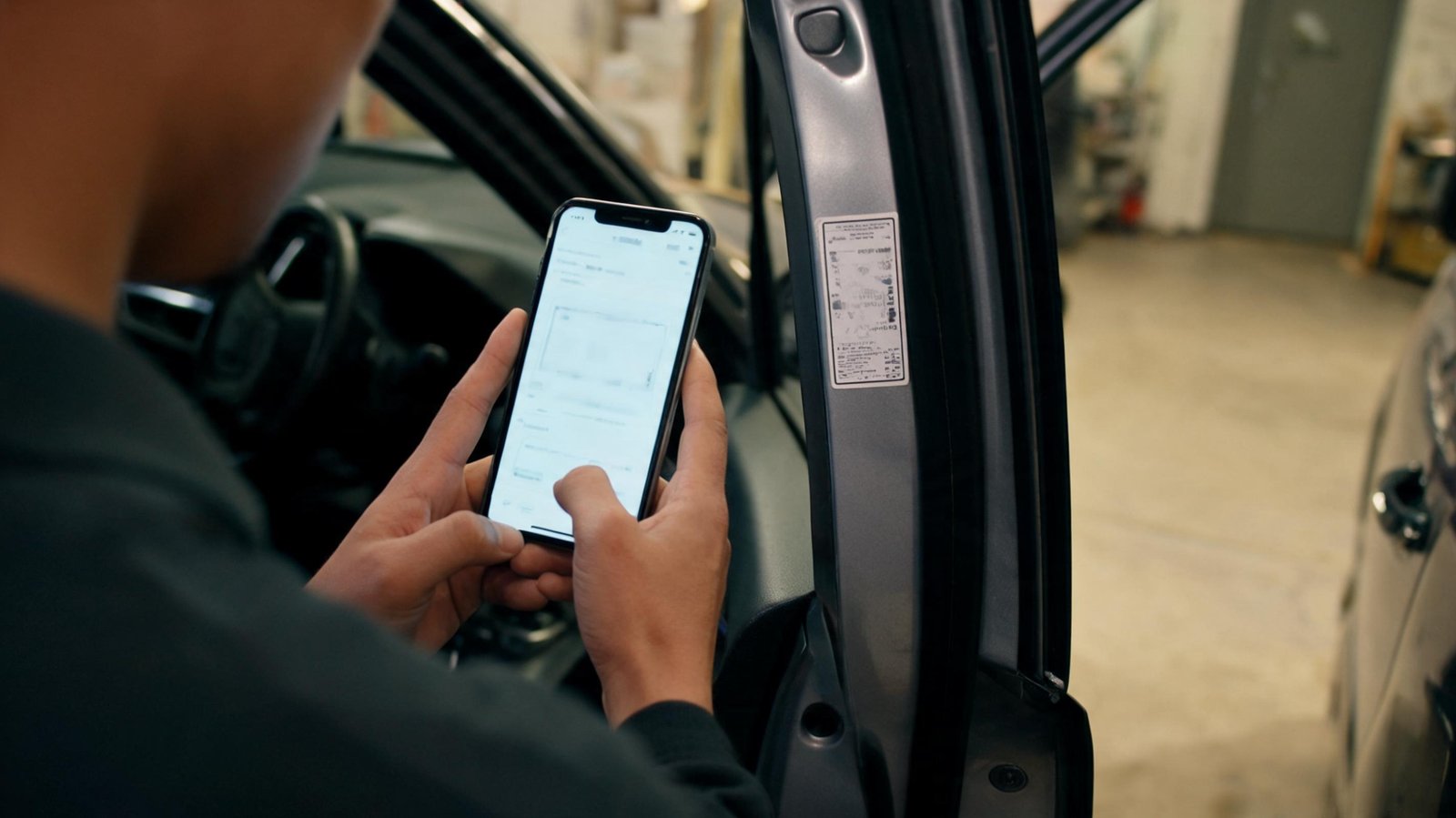
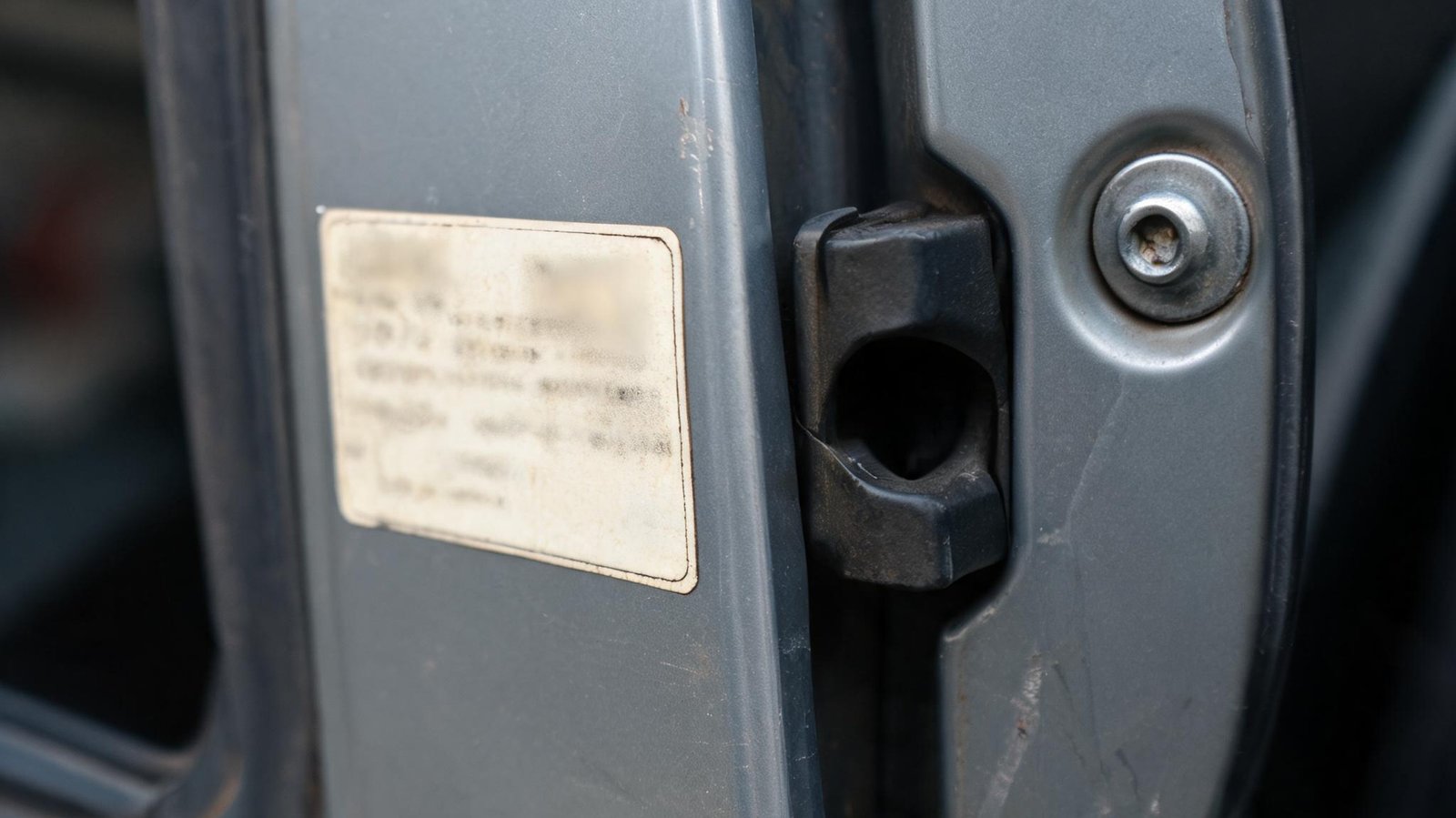
Four reliable places: the driver-side door jamb compliance label, the dashboard plate at the windshield base, the vehicle title and registration, and on many vehicles a sticker in the engine bay or door post. The door jamb is the one to photograph.
The compliance label on the driver-side door jamb is the workhorse: VIN plus build details in one sticker, visible with the door open, no tools required. The windshield-base plate is the fast glance — useful for confirming you are reading the same vehicle — but it often carries less detail. Paperwork confirms everything, but documents can be stale; the physical sticker is what the desk wants in a photo.
Photograph the whole label, not just the VIN line — the build codes around it matter too. Light it from the side so the print stays readable, and send the photo with your engine bay shots. If a sticker is missing or damaged, say so; the desk works from the paperwork and the block stamping instead.
- Driver-side door jamb compliance label — photograph this one
- Windshield-base dashboard plate — fast confirmation
- Title and registration — matching paperwork
- Engine bay or door post stickers — additional build detail on many makes
How does the eighth character carry the engine family?
The standard VIN is 17 characters in fixed positions, and for many manufacturers the engine type sits at the eighth character — the last digit of the vehicle-descriptor block. A decode translates that position into the engine your car was built with.
The positions are not random. The first three characters identify the manufacturer and market; positions four through eight describe the vehicle — model, body, and for many makes the engine type; position nine is a check digit that validates the whole string; position ten carries the model year; eleven is the assembly plant; and the last six are the serial that makes this vehicle unique.
Because the layout is standardized, any correct decode returns consistent results — and the eighth-character engine digit is why 'just check the VIN' works as a first filter. It is also why a swap can be spotted: when the decode says one family and the block stamping says another, the vehicle's story has changed since the factory, and the desk needs to understand why before quoting.
| Positions | What it identifies | Why it matters for engines |
|---|---|---|
| 1–3 | World manufacturer identifier | Who built the vehicle and where |
| 4–8 | Vehicle descriptors — including the engine-type digit at position eight for many makes | The factory engine family, straight from the build record |
| 9 | Check digit | Validates the VIN is genuine and complete |
| 10 | Model year | Engine families change between years — this anchors the era |
| 11 | Assembly plant | Occasionally explains build variations |
| 12–17 | Serial number | Makes this vehicle unique — no two match |
How do I run a VIN engine lookup for free?
Enter the 17 characters at the NHTSA VIN decoder — it is free and official — and read the engine section of the result: displacement, cylinders and often the family name. Thirty seconds, no account, no cost.
The NHTSA VIN decoder is the standard starting point because it is federal, free and neutral — no seller is steering the answer. Type carefully: one wrong character changes the result, and the letters I, O and Q never appear in a VIN, so an 'I' is always a '1'. When the decode loads, note the engine details and the model year, and screenshot the result for your records.
From there, compare the decode against what you can see. If you are shopping for a replacement, this decode is also the moment to write down your VIN's engine family name — a free VIN decoder engine result gives you the search term that half of the marketplace listings are indexed by. Getting your engine code from VIN data is really that simple; the stamping on the block is the confirmation step.
- Find the VIN on your door jamb label — 17 characters, letters and digits
- Enter it at the NHTSA VIN decoder — free, no account required
- Read the engine section: displacement, cylinders, family name
- Screenshot the result and keep it with your service records
What can't the VIN tell you?
It cannot hand you the exact stamped code with its version suffix, and it cannot describe the engine currently installed if it differs from the factory build. The VIN describes the original build — the suffix and the present come from the block.
Two boundaries matter. First, the suffix: the decode names a family, not the revision — two vehicles with the same family engine can carry different suffixes that change mounts, sensors or emissions hardware. Second, the present: the decode describes the factory build, and vehicles live long lives. A replaced engine, a swapped cover, paperwork from another car — all of it can make the physical truth diverge from the build record.
That is not a flaw in the VIN — it is a division of labor. The VIN answers 'what should be here?'; the block stamping answers 'what is here?'. A fitment decision needs both questions answered, which is why the desk never quotes from one alone.
Why pair the VIN with the engine code on the block?
Because the pair is a cross-check neither identifier can fake alone: the VIN catches the build, the code catches the hardware, and agreement between them opens the interchangeable-engine list with confidence.
When both keys agree, the order process gets simple: the interchange list opens, the nine options across condition tiers get priced, and the unit ships labeled with both identifiers. When they disagree, the desk treats it as information, not an obstacle — a mid-life engine replacement is common and manageable, it just needs to be understood before a replacement is chosen.
This two-key routine is the same one described in our guides to what an engine code actually names and the difference between an engine code and a VIN — this article is the field manual for the VIN half of the pair.
| Identifier | The question it answers | Where to find it |
|---|---|---|
| VIN | What did the factory build? | Door jamb label, windshield plate, registration |
| Engine code (stamped) | What design and version is actually here? | Machined pad on the cylinder block |
| Build sheet / window sticker | What options did this vehicle ship with? | Glovebox, documents, digital archives |
| Engine number | Which physical unit is this? | Block stamping and registration paperwork |
What are the most common VIN-to-engine mistakes?
Three repeat offenders: decoding the VIN and calling the family the answer, reading a partial door label photo, and buying from a listing that shows neither a VIN decode nor a block photo. Each is cheap to fix and expensive to skip.
The family-for-version mistake is the classic: the decode says 'this family of engine' and the buyer hears 'this exact engine'. Then the suffix turns out different. The partial-photo mistake is quieter — half a door label, characters cut off, and the desk spends the day asking for reshoots. The listing mistake is the marketplace gamble: no VIN, no code, just a confident description and a low price.
The cure for all three is one habit: decode, photograph, confirm. When in doubt, our guide to finding your engine code covers the photo routine make by make, and the fitment desk happily runs the check on any VIN you send.
What does a wrong-engine order actually cost?
If a wrong engine ships: return freight on a full unit typically runs $250–$600, a shop's remove-and-refit labour adds $400–$900, and vehicle downtime bills $40–$90 per day on top. The VIN-and-code check that prevents it is free.
The arithmetic is why every serious seller verifies before dispatch. A mismatch is not one cost — it is a stack: two freight bills, two rounds of labour, and days of downtime in between. On a work truck or a family's only car, the downtime line is the one that stings longest.
| Item | Typical cost | Notes |
|---|---|---|
| Return freight, full engine | $250–$600 | Class and liftgate decide the number — paid twice per mistake |
| Shop remove-and-refit labour | $400–$900 | The second swap is pure loss |
| Vehicle downtime | $40–$90 per day | Rental or lost working days while the bay waits |
| Core handling friction | Varies | Mismatched paperwork complicates core credits |
| VIN decode with the NHTSA decoder | $0 | Thirty seconds, official, free |
| VIN + code confirmation with our desk | $0 | One photo session — the insurance that matters |
What if the VIN says one engine but the car has another?
That means the vehicle has had an engine replacement or swap during its life — common and not automatically a problem. The desk needs to understand the change before quoting: what was installed, and whether it was done to factory-spec or as a conversion.
A decode and a block stamping running different stories is information, delivered cheaply. It usually means a prior replacement (fine — engines get replaced), occasionally a performance swap or conversion (also fine, but with consequences for mounts, electronics and emissions), and very rarely a paperwork problem worth walking away from.
If you are the one planning a change — installing a different code than the factory build — our engine swap compatibility guide walks the mounts-electronics-emissions order that decides whether the project is sane. If you are checking someone else's work, send both photos to the desk: the cross-check takes minutes and tells you which story the car is actually living.
How do I use the VIN when buying a used engine online?
Use it as your filter and your question. A serious seller will match a listing against your VIN's engine family and show you the block code — if a listing offers neither, treat that as the answer and keep looking.
Marketplace descriptions range from excellent to fiction. The VIN filter cuts through both: your decode gives you the family name to search, and any listing worth buying will survive a question about the code stamped on its block. We publish our own lookup by engine code — more than 120 families with fitment notes and prices — because starting from the right identifier is how this trade avoids its most expensive mistakes.
One more VIN use buyers forget: the same decode that identifies your engine also flags whether the vehicle has open recalls, through the NHTSA recalls lookup. No reason to buy an engine for a vehicle that a free campaign would have fixed.
What does A2Z Engines check when you send a VIN?
The same sequence every time: decode the VIN to the factory build, read your block-code photos character by character, run the interchange list for the confirmed pair, and label the unit with both identifiers before dispatch. If the two stories disagree, the order pauses until they are understood.
The desk reads in a fixed order. First the decode — what did the factory build? Then the close-up of the stamping — what is actually in the car? Then the wide shot, confirming the pad being read is the pad that matters. Only when the picture is complete does the interchangeable list open and the nine options get priced across condition tiers and warranty lengths.
The textbook case from this month: a customer's decode said the right family, but the block photo showed the suffix belonged to an earlier revision. The pause cost an afternoon; the correction saved a return freighter, because the earlier revision used different mounting hardware. His replacement shipped labeled with both identifiers, and his shop verified the match on the stand in under a minute.
- Send the VIN — the door jamb label photographed in full
- Decode — the factory build and engine family, on record
- Read the block code — every character, suffixes included
- Run the interchange list — which years and platforms share this exact engine
- Label and dispatch — both identifiers on the unit and the file

What do we supply once your VIN is confirmed?
Used, reconditioned and remanufactured engines matched to your confirmed build — with transmissions on the same discipline — compression-tested on the bench, 9/16/36-month warranty tiers, and free insured freight USA-wide in 12–16 working days.
Everything ships from the same decode-and-confirm process. A driver with the F-150 family, for example, shops the used Ford F-150 engine for sale against a confirmed VIN, and an Audi platform runs through a reconditioned EA839 engine for sale with the same two-key check. Gearboxes follow the rule book: a used Ford F-150 transmission for sale or a reconditioned Ford F-150 transmission for sale ships against the same confirmed-build paperwork, alongside the rest of the transmission catalogue.
Every engine leaves as a complete long block unless you specifically need a short block — compression-tested, and run-tested where the unit allows. The engine code index lists what we supply, and the fitment desk answers before you order, not after.
- Compression-tested on the bench — run-tested where the unit allows
- 9/16/36 months warranty, whichever comes first — by condition tier
- VIN decoded AND block code cross-checked before dispatch — every order
- Free insured freight, USA-wide, 12–16 working days
- Fitment desk, Mon–Sat 8AM–6PM — answers before you order, not after
What do these terms mean?
Plain-English definitions of every identifier and document in this guide, so the next conversation about your engine sounds fluent from the first sentence.
VIN — Vehicle identification number; the 17-character identity of one specific vehicle, carrying its build record in fixed positions.
VIN Decode — Reading those fixed positions to identify manufacturer, model year, plant and engine family; the NHTSA decoder does this free.
VIN Engine Identification — The routine in this guide: decode the VIN to the factory engine family, then confirm the stamped code to pin the exact version.
Compliance Label — The door-jamb sticker carrying the VIN and build details; the fastest place to photograph your vehicle's identity.
Build Sheet / Window Sticker — The factory record of what one vehicle was built with, including the engine; often replicated on glovebox stickers.
Engine Code — The manufacturer's short identifier for one engine design and version, stamped on the block; the ordering key for replacements.
Engine Number — The unique serial of one physical engine; used for registration, insurance and theft checks rather than fitment.
Interchange List — The verified map of model years and platforms that share the same engine; the desk's tool for safe fitment across years.
Where do these figures come from, and where can I verify them?
The checks and price ranges follow standard trade practice and the public resources below. You can verify the background yourself:
Ranges are typical US independent-workshop figures and our own condition and warranty tiers — planning guidance, not a quote for your vehicle. A2Z Engines is the trading brand of QB AUTOZ LLC, a Mississippi-registered supplier — the company record is on our about page.
- NHTSA VIN decoder — decode your exact build and engine family by VIN, free
- NHTSA recalls — check open recall campaigns for your vehicle by VIN
- EPA vehicle and fuel emissions testing — how emissions rules create engine variants within one family
- FuelEconomy.gov — official data that distinguishes drivetrain and engine configurations by model year
- Engine code index — our own lookup of the codes we supply, with prices
Which related guides should I read next?
These are the guides we hand to customers at the end of this conversation — each one picks up a thread from this post and finishes it.
- Engine Swap Compatibility: Can I Swap a Different Engine Code Into the Same Model? — when the VIN story and the block story diverge on purpose.
- What Is an Engine Code and Why Does It Decide Fitment? — the other half of the two-key check.
- Engine Code vs VIN: What's the Difference? — both identifiers side by side, in one table.
- Explore the site: shop by make · engine code index · used engines · transmissions — every unit fitment-checked before dispatch.
- Ready for numbers? Get your price — nine options across three condition tiers — or search the full catalogue; more guides live on the blog index.
Frequently asked questions
What engine is in my car — can the VIN tell me?
Yes, in two layers. A free decode through the NHTSA VIN decoder returns the engine details the factory recorded for your build — displacement, cylinders, often the family name. To pin the exact version sitting in the car today, confirm it against the engine code stamped on the block. The VIN gives you the family from the build record; the stamping gives you the hardware.
How do I decode my VIN for free?
Go to the NHTSA VIN decoder, enter the 17 characters from your door-jamb label, and read the result — it is federal, free and takes about thirty seconds. Type carefully: VINs never contain the letters I, O or Q, so an 'I' is always a '1'. Screenshot the engine section and keep it with your service records as your vehicle's official decode.
Does the VIN give me the engine code directly?
It gives you the engine family your vehicle was built with — for many manufacturers via the engine-type digit at the eighth position — not the full stamped code with its version suffix. The suffix lives on the block itself, which is why the routine is decode first, block stamping second. Two vehicles with the same family engine can still carry different suffixes, and the suffix is what the order rides on.
I found the VIN but the label photo came out blurry — what do I do?
Reshoot with side lighting and the whole sticker in frame: door open, phone steady, light raking across the print instead of reflecting off it. If the sticker itself is damaged or missing, tell the desk — the paperwork plus a clear block-code photo carries the check instead. Partial or blurry labels are the single most common reason a quote request sits in the queue.
Can two vehicles have the same engine family but different engine codes?
Yes — routinely. Model years, trims and emissions packages all move the engine under one name, and manufacturers revise designs mid-run with suffix changes. That is exactly why VIN engine identification pairs the decode with the stamped code: the family narrows the search, and the code version decides what actually bolts in, wires up and passes inspection.
What if the decode says one engine and the block stamping says another?
That means the vehicle's engine was changed during its life — a prior replacement, or a conversion. It is common and checkable, not automatically a problem. Send both photos plus a wide shot of the stamping location to the desk; the cross-check runs in minutes and tells you which story the car is living, which is what any replacement order needs to be built on.
Is a VIN check enough to order a replacement engine?
It is the right first step, not the whole check. A serious supplier will take your VIN decode, then ask for a photo of the engine code on the block, then cross-check both before quoting. That sequence — decode, confirm, cross-check — is free at our desk and is the difference between a one-time install and a return-freight cycle. Ordering from a VIN alone misses the suffix.
Where do I find the VIN quickly if I am in a hurry?
Open the driver door and look at the jamb label — VIN and build details in one sticker. In a bigger hurry, glance at the dashboard plate through the windshield base for the 17 characters, and use the registration or insurance card as backup confirmation. For anything engine-related, photograph the full door-jamb label; that is the shot the fitment desk actually works from.
Can the VIN tell me which transmission I have?
The decode often includes drivetrain and transmission details for your build — notes on drive type, and sometimes transmission family — which is why the transmission desk asks for the same VIN routine as the engine desk. Confirm the gearbox by its own code or part number where visible, and cross-check with the VIN decode; our transmission catalogue runs on the same confirmed-build discipline.
How fast can I get a price after sending my VIN?
Usually within the same business day, often faster. The desk decodes your VIN, confirms the block code against the photos, runs the interchange list, and sends nine options — three condition tiers across three warranty lengths, priced side by side. Send the VIN through the quote page or call the fitment desk, Mon–Sat 8AM–6PM.
What warranty comes with a replacement engine?
Every tier carries cover: 9 months on used, 16 on reconditioned, 36 on remanufactured — 9/16/36 months, whichever comes first. Warranty starts at delivery, claims get a written decision within 48 hours of a complete file, and the file starts with the same two identifiers this guide is about: your VIN and your engine code, matched on the unit's label. Full terms live on the warranty page.
Check your fitment and see nine price options
Enter your VIN or engine code — we match the unit to your vehicle before any price is shown. Nine options means three condition tiers across three warranty lengths.
Get my price Call +1 (662) 452-4928