How Do I Find My Engine Code?
Top summary answer
An engine code is the manufacturer's short identifier for one specific engine design — B48, EA888, LSY — and it is what actually decides whether a replacement fits, prices and warrants. You will find it in three reliable places: the VIN (decoded), a sticker or label on the engine or engine bay, and a stamped pad on the cylinder block itself. Five minutes with a rag and a phone camera settles it.
What exactly is an engine code — and why does it matter?
An engine code is the manufacturer's short identifier for one specific engine design — like B48, EA888 or LSY — and it is the single most important piece of information for buying the right replacement. Two engines can share a displacement, look identical from the outside, and still use different codes, so the code decides fitment, price and warranty eligibility.
Think of it as the engine's family name. A 2.0-litre turbo can be a B48, an EA888 or an LSY depending on who built the car, and even within one family the suffixes matter — B48A and B48B are not drop-in twins. Parts counters, salvage yards, insurers and every serious supplier work from this code, because decoding it is the only way to know you are talking about the same engine.
Where it gets expensive is at the edges: sellers who list engines by displacement alone, buyers who order from a photo of a valve cover, and shops that assume last year's fitment carries over. In our trade, almost every wrong-engine story we hear starts with a guess about the code — and ends with two-way freight. This guide is the five-minute routine that prevents it: find the VIN, find the label, find the stamped pad, and confirm before anything ships. It is also our standing answer to the question our desk hears a dozen times a week — how to find engine code, quickly and for free.
One more thing worth saying early: the engine code is not the same as the engine number. The code identifies the design (fitment); the number identifies the individual unit (theft checks and registration paperwork). You will need both at different moments — just never confuse one for the other when ordering.
- Engine code = design identifier → decides what fits and what it costs
- Engine number = unique serial for one physical unit → registration and theft checks
- VIN = the 17-character vehicle identity that helps decode the engine family
- Displacement alone is never enough to order an engine
Who is this engine-code guide for?
Anyone who needs to identify an engine before money moves: owners requesting a replacement quote, shops and mechanics ordering units, buyers checking a used car or a used engine listing, and DIY swappers verifying fitment before they lift the block.
The use case is always one of two moments: buying, or verifying. Buying means getting a quote for a replacement engine and needing the exact code on the request. Verifying means standing in front of an engine — yours, a seller's, or a salvage unit — and answering the only question that matters: what exactly is this?
The decision context is blunt: the code moves the price, the availability and the warranty. On some platforms the same displacement splits into a dozen codes across model years, and two codes that look similar can differ by mounting, emissions hardware or turbo setup. Get the code right and the search ends in minutes; get it wrong and the same search ends in return freight.
If you are an owner, work through the five-minute locating routine and stop when the fitment desk confirms your code. If you run a shop, treat the photos and VIN habit as your ordering checklist — it is the same one our desk runs before it releases any unit.
- Owners requesting a replacement quote — the code is step one
- Shops ordering units — verify before you commit labour
- Buyers checking a used car or engine — read the code, not the badge
- DIY swappers — fitment first, wrench second
Where are engine codes usually stamped or printed?
Most manufacturers put the code in one of five places: a machined pad on the cylinder block, the front of the head or timing cover, a sticker on the engine or in the engine bay, and — indirectly but reliably — inside the VIN. The exact spot is model-specific, which is why we always start with the two easiest checks before reaching for a flashlight.
The hierarchy in practice: the VIN and the door-jamb label first, the engine-bay sticker second, the stamped block pad third, and the dealer or our fitment desk as the referee when anything is ambiguous. The block stamping never lies — a replaced valve cover can lose its sticker, paperwork can be stale, but the pad on the block carries the factory stamp.
Location details are where guides usually get sloppy, so here is the honest version: the pad is often low on the block on the intake side, near the oil filter housing, the starter or an engine mount — but every family has its own engine code location habit. A phone photo of the whole bay beside a close-up of what you think is the pad lets the desk confirm the spot in seconds, even when you are not sure yourself.
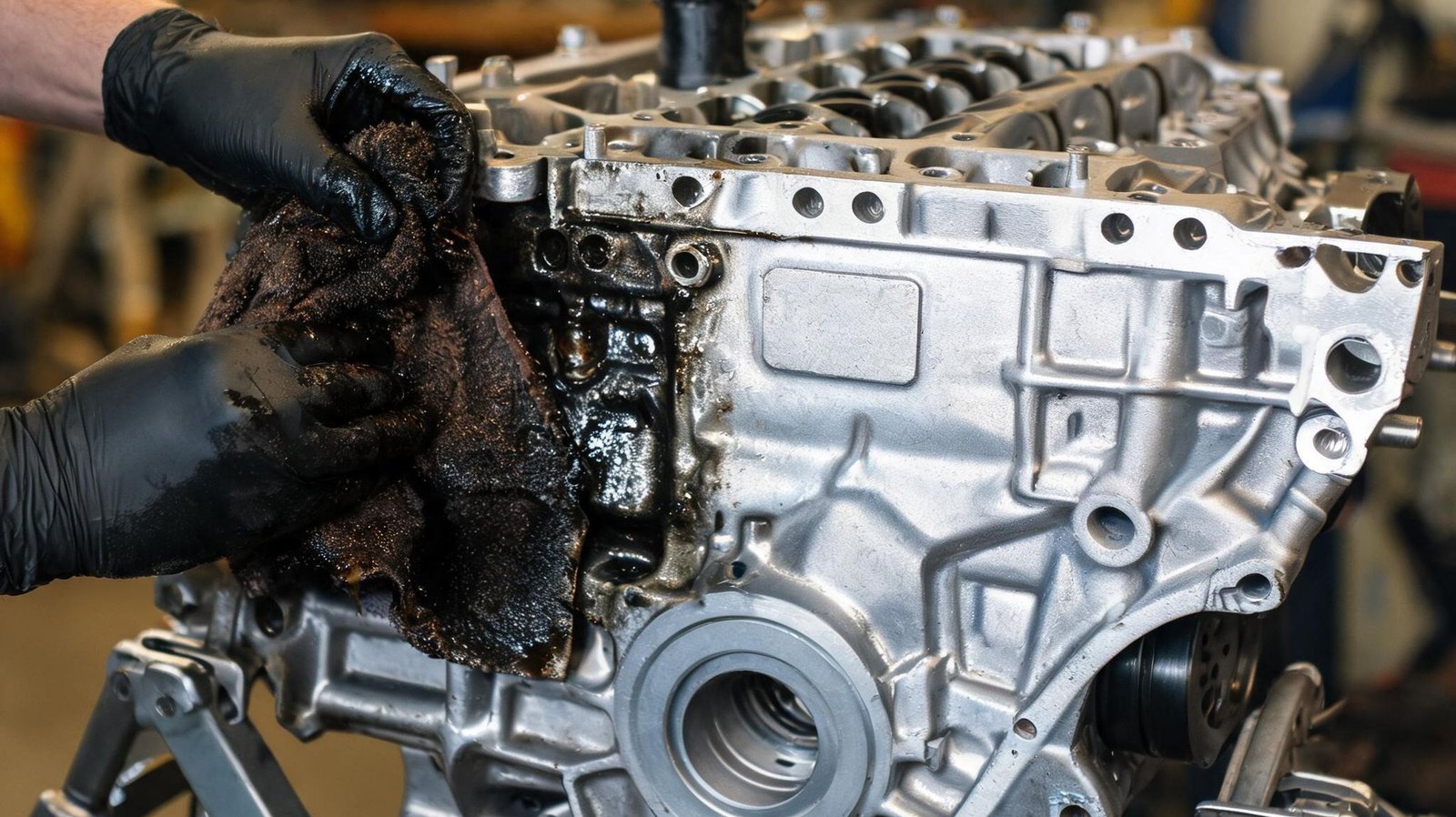
Also budget for reality: twenty years of oil, grime and road spray hide more stamps than rust does. A rag, a mist of brake cleaner on a cold engine, and a flashlight held at a low angle to the surface turn most invisible pads visible in seconds. Never scrape or wire-brush a pad — you can erase the characters you came for.
How do I find my engine code in five minutes?
Run the same order every time: decode the VIN, check the door and bay labels, find the machined pad, then photograph everything. Five minutes, one rag, one flashlight — and the fitment desk can confirm the code from your photos.
Do the boring steps first — they are where the answers live. Most owners find what they need at step one or two; the block pad is the confirmation, not the starting point. And photograph as you go: a close-up of the characters, plus a wider shot showing where on the engine you found them, is worth more than any description over the phone.
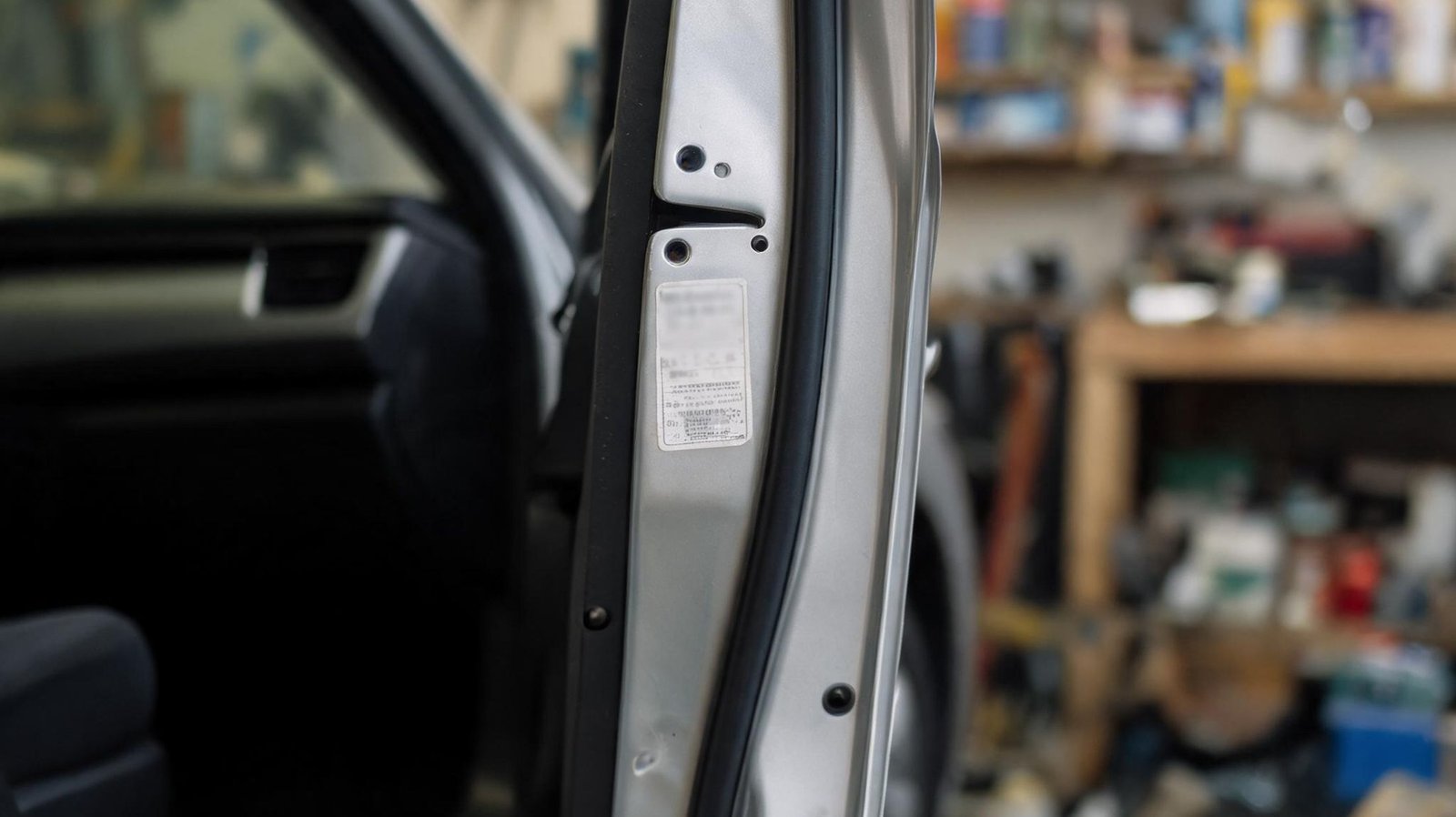
- Find the VIN first — door jamb label or the base of the windshield — and snap a clear photo of the whole sticker.
- Decode it: run the VIN through the NHTSA VIN decoder to get the engine family for your exact build.
- Look for the engine data sticker — hood underside, radiator support, valve cover or timing cover — and photograph it even if faded.
- Find the machined pad on the cylinder block: wipe it clean, then light it from the side so the stamping shadows stand out.
- Check the glovebox for the build sticker (GM RPO codes and similar) — it lists the engine code for the exact vehicle.
- Send the desk your photos plus the VIN and odometer; we confirm the code and the nine options that match it, free, before you order.
| Family | Common code locations | Desk tip |
|---|---|---|
| BMW / MINI | Machined pad low on the block, often the intake side; label on the valve cover | Wipe the pad area first — this one is routinely buried in oil mist |
| Audi / VW | Front of the block near the oil filter bracket; timing cover label | EA-family codes are long; photograph every character, suffixes included |
| Ford | Block pad near the starter or an engine mount; valve-cover sticker on trucks | F-150 codes repeat across model years — the year matters as much as the code |
| GM | Pad behind the alternator or near the oil filter; service-parts (RPO) sticker in the glovebox | The glovebox sticker is gold — start there when it survives |
| Honda / Toyota | Front of the block below the intake side; a stamped pad by the oil filter housing | Raking light from the side makes these shallow stamps readable |
| Hyundai / Kia | Front of the block near the oil pan rail | Family codes change with facelifts — we cross-check the model year |
| Stellantis | Block pad near the driver-side engine mount | HEMI and Pentastar families carry market-specific suffixes |
How do I read the code once I find it?
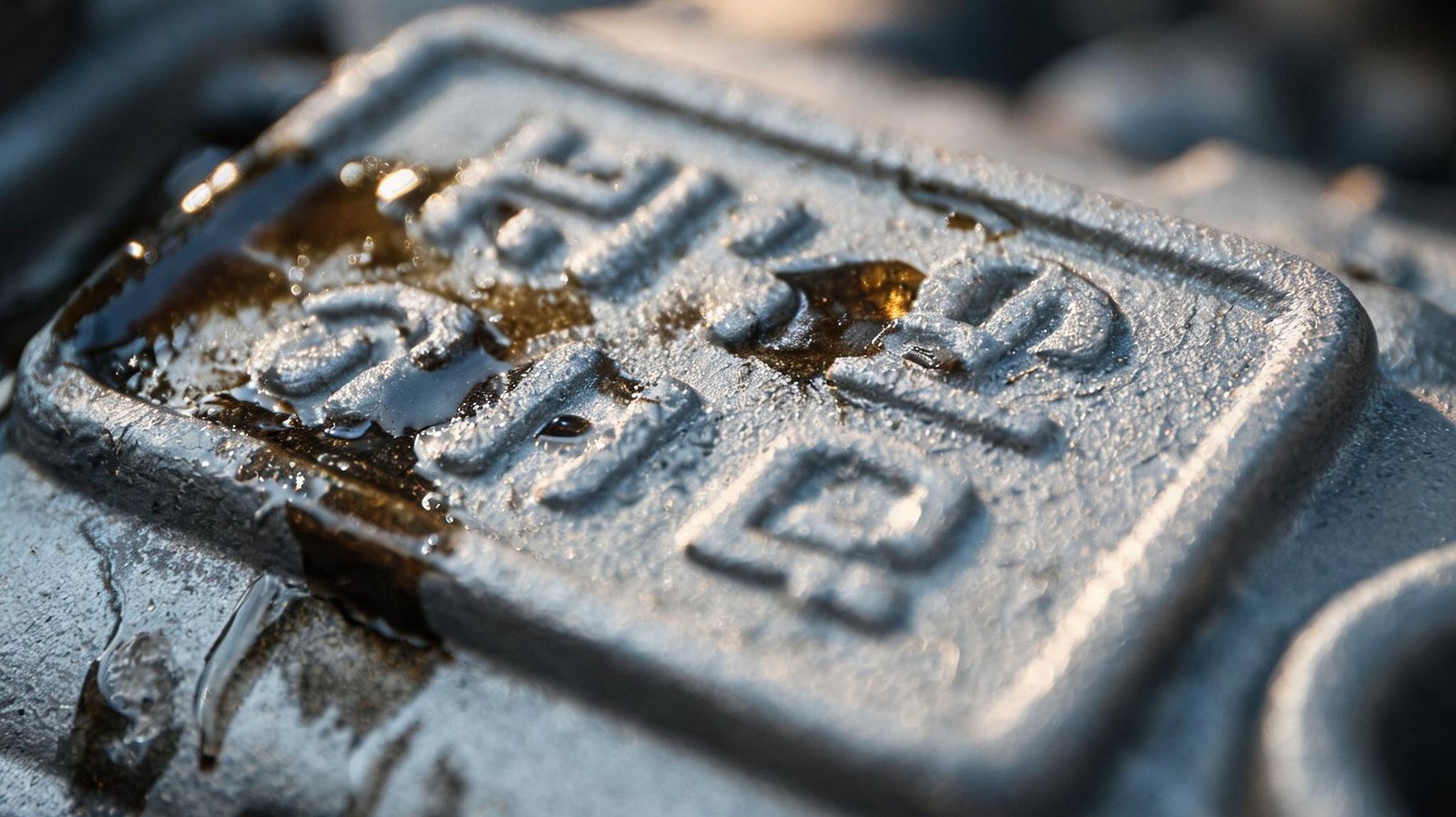
Read it as a family name plus a version: leading characters name the engine family (B48, EA888, L83), and the letters, numbers and dashes around them describe the version, market and hardware. Copy every character exactly as stamped — suffixes are not decoration, they are the fitment.
Expect small formatting differences: some plates run the code together with no spaces, some split it across two stamp lines, and a dash in one market can be a space in another. What matters is completeness. The shortened code people quote in conversation — say, EA888 — is enough for a family conversation but not for an order; the stamp on the block may carry two or three more characters that decide the variant.
Photography here is a skill worth sixty seconds of practice: park the phone steady, tap to focus on the characters, and shoot with the light coming from the side rather than above. A well-lit close-up usually beats typing the code out with a typo — and our desk reads these images all day.
How do I find the engine code from my VIN?
The VIN does not spell the engine code out, but it encodes the engine family for your exact build — for many manufacturers, the eighth character is the engine-type digit. Decode the VIN first, then confirm against the label or the block pad; the desk does the same three-way check before releasing any unit.
Start with the NHTSA VIN decoder — the fastest way to find engine code by VIN. It returns the engine details your VIN was built with, which narrows the family in seconds. From there, your vehicle registration and insurance documents often carry the engine number as well, and a dealer parts counter can decode the same VIN to a specific engine code when you need the manufacturer's own answer.
Where the VIN route earns its keep is ambiguity: faded stickers, swapped covers, or a seller's claim that a unit 'should fit'. VIN-to-engine checks are how we verify claims — the eighth digit is the starting point, not the whole story, because trim and market packages can change hardware inside the same family. Our desk treats it as one leg of a three-legged stool: VIN, sticker, pad. For how the VIN and the code compare side by side, see our engine code vs VIN guide — one table, both keys.
What if I can't find the code anywhere?
Four common reasons: grime covering the pad, a replaced cover that took the sticker with it, a lost or painted-over label, or simply looking at the wrong spot on the block. Every one of those has a workable path — and none of them is 'guess by displacement'.
First, widen the search: check both sides of the block, the area behind the alternator, and the front cover; some families stamp low near the oil pan rail, others high near the head deck. Second, lean on the vehicle paper trail — registration, insurance, service invoices and the glovebox build sticker all carry engine identifiers. Third, involve the referee: a dealer parts counter can decode your VIN to the manufacturer's own engine code, and our desk does the same free of charge.
And a word on shortcuts: matching by displacement, by engine photo from the internet, or by a marketplace listing that says 'fits most' is how wrong engines ship. Photograph what you can, send the VIN, and let the three-way check run — it is the cheapest insurance in this whole process.
What's the difference between the engine code, engine number and VIN?
The engine code names the design (fitment); the engine number identifies one physical unit (registration and theft checks); the VIN identifies the whole vehicle (decoding and paperwork). All three show up in different conversations — and only the code tells you what actually fits.
In practice you will juggle all three at once. A salvage seller quotes a unit by engine number when you agree to buy; your registration lists that number against your VIN; and the fitment question — the one that decides the purchase — is answered by the code. Think of it as an engine number lookup versus an engine code check: same block, two completely different jobs. Being fluent in which identifier does what is half of buying well.
| Identifier | What it is | Where it lives | What it is for |
|---|---|---|---|
| Engine code | Manufacturer's design ID (e.g. B48, EA888) | Block pad, engine sticker, glovebox build sticker | Fitment, pricing, warranty — the ordering key |
| Engine number | Unique serial for one physical engine | Stamped on the block; registration documents | Theft checks, registration, insurance records |
| VIN | 17-character vehicle identity | Door jamb, windshield base, registration | Decoding the build, verifying claims, paperwork |
Why do engines with the same displacement have different codes?
Because displacement is only one number in a much longer spec sheet: emissions rules, tuning, mounting direction, turbo and injection hardware and model-year updates all create new codes. Two 2.0-litre turbos can differ in ways that matter under the hood — and one of them will not bolt up.
Watch the families evolve: the EA888 has marched through generations with new timing systems and injectors; BMW's B48 line splits into transverse and longitudinal variants with different sumps and mounts; GM's truck V8s carry RPO codes that swap with the emissions hardware. Same displacement, different code, different everything that a wrench touches.
This is also why the emissions paperwork matters: EPA vehicle and fuel emissions testing rules and market-specific calibration are often exactly what created the variant in the first place. When a seller says 'same engine, different code', they are usually describing two different engines.
What does a wrong engine code actually cost?
More than the unit itself: two-way freight on a full engine typically runs $250–$600, a shop's remove-and-refit labour adds $400–$900, and vehicle downtime quietly racks up more. The code check that prevents all of it takes five minutes and costs nothing.
The arithmetic is why we push verification so hard. A wrong unit is not just a return — it is a second freight bill, a second round of labour, and the days your car spends on the lift between them. On trucks used as work vehicles, or a family's only car, the downtime line dwarfs everything else in the quote.
The other half is procedural: a unit ordered against the wrong code can complicate core returns and warranty eligibility, because the failure story no longer matches the build sheet. One photo of the code, confirmed by the desk, keeps every one of those risks at zero. It really is the cheapest five minutes in the trade. And for the why behind the search, our what is an engine code explainer covers what the code decides — fitment, pricing and warranty.
| Item | Typical cost | Notes |
|---|---|---|
| Return freight on a full engine | $250–$600 | Freight class and liftgate decide the number |
| Shop remove-and-refit labour | $400–$900 | Paying the swap twice is the real sting |
| Vehicle downtime | $40–$90 per day | Rental or lost work days while the bay waits |
| Core handling complications | Varies | Mismatched build sheet complicates the core credit |
| Confirming the code first | $0 | One photo to the fitment desk — the cheapest insurance here |
What do we supply once your code is confirmed?
Used, reconditioned and remanufactured engines matched to your confirmed code and VIN-checked before dispatch — with free insured freight USA-wide in 12–16 working days, and the transmission alongside when you need one.
Take the truck side: we supply a used Ford F-150 engine for sale and a reconditioned Ford F-150 engine for sale across the generations buyers actually ask for, and every unit leaves the bench compression-tested — and run-tested where the unit allows. Full-size platforms like the Chevrolet Silverado 1500 run through the same VIN-and-code cross-check before anything is released.
Transmissions follow the same discipline: a used Ford F-150 transmission for sale or a reconditioned Ford F-150 transmission for sale is matched with the same paperwork, alongside the rest of the transmission catalogue.
- Compression-tested on the bench — run-tested where the unit allows
- 9/16/36 months warranty, whichever comes first — by condition tier
- VIN cross-matched before dispatch — nothing ships until fitment matches
- Free insured freight, USA-wide, 12–16 working days
- Fitment desk, Mon–Sat 8AM–6PM — answers before you order, not after
What does A2Z Engines check when you send a code or VIN?
The same three-way check every time: decode the VIN, compare it with your code photo, and cross-check the interchange list for your platform — then price the nine options that actually fit, and label the unit with your code and VIN before it ships.
It starts with your photos: the VIN label, the code close-up, and the wide shot of where you found it. From there the desk decodes the NHTSA VIN decoder result, compares the eighth-digit engine family against the stamping, and pulls the interchange list — the set of model years and platforms that share this exact engine. Only then do prices mean anything.
The textbook case from this month: a customer's photo showed a code that read one character cleaner under raking light than it had under his work light — and that one character moved him from a B48A quote to the B48B he actually had. His unit shipped labeled with both the code and the VIN; his independent shop confirmed the match on the stand in under a minute. That is the whole point of the front-of-house check: the confirmation happens before the freight, not after.
When a unit does go wrong later, the same file carries the warranty cover and the claim path — because the code and VIN on the label are the first thing the claims team reads.
- Decode the VIN and identify the engine family for the exact build
- Compare the decode against your code photos — every character, suffixes included
- Pull the interchange list: which model years and platforms share this engine
- Price the nine options across three condition tiers and confirm availability
- Label the unit with your code and VIN — and match them again at dispatch
How do I confirm fitment before ordering?
Enter the VIN or the engine code on the quote page and you get nine options across three condition tiers and three warranty lengths; the desk cross-matches the code to your VIN range before anything ships.
If the stamping is hard to read, the VIN path still works: decode it with the NHTSA VIN decoder, find your family in the engine code index, and send the desk your photos. The fitment check is the same one we run internally — nine options, exact code, nothing shipped on a guess.
- VIN or engine code entry — get your price in minutes
- Nine options: three condition tiers across three warranty lengths
- VIN-range cross-match before dispatch — confirmed, not assumed
- A real person on the fitment desk if the stamping is unreadable
What do these terms mean?
Plain-English definitions of the identifiers and trade terms in this guide, so the next phone call about your engine sounds like your second one, not your first.
Engine Code — The manufacturer's short identifier for one specific engine design (B48, EA888, L83); the code is what decides which replacement units fit.
Engine Number — The unique serial stamped for one physical engine; used for registration, insurance and theft checks rather than fitment.
VIN — The 17-character vehicle identification number; it encodes the build, including the engine family for most manufacturers.
Interchange — The verified list of model years and platforms that share the same engine; the desk's tool for safe substitutions.
Long Block — An engine assembly complete with the cylinder head(s); what most replacement buyers receive.
Short Block — The block, crank and pistons without the head; a builder's part more than a drop-in replacement.
Reconditioned Engine — A used engine stripped and rebuilt with worn service parts replaced and re-tested; longer warranty than a straight used unit.
Where do these figures come from, and where can I verify them?
The locations, checks and price ranges follow standard trade practice and the public resources below. You can verify the background yourself:
Ranges are typical US independent-workshop figures and our own condition and warranty tiers — guidance for planning, not a quote for your vehicle. A2Z Engines is the trading brand of QB AUTOZ LLC, a Mississippi-registered supplier — the company record is on our about page.
- NHTSA VIN decoder — decode your exact build and engine family by VIN
- EPA vehicle and fuel emissions testing — how emissions rules create engine variants
- FuelEconomy.gov — official data that distinguishes drivetrain and engine configurations
- Engine code index — our own lookup of the codes we supply, with prices
Which related guides should I read next?
These are the guides we hand to customers at the end of this conversation — each one picks up a thread from this post and finishes it.
- What Does a P0301 Misfire Code Actually Prove? — a fault code is not an engine code; here is the difference in practice.
- Rod Knock or Lifter Tick: How Do I Tell? — when noise sends you looking for a replacement engine.
- Why Is My Engine Knocking When Accelerating? — the diagnosis ladder before you buy anything.
- Explore the site: shop by make · engine code index · used engines · transmissions — every unit fitment-checked before dispatch.
- Ready for numbers? Get your price — nine options across three condition tiers — or search the full catalogue; more guides live on the blog index.
Frequently asked questions
Where is the engine code on most cars?
There is no single universal spot — which is exactly why we run the three-checks routine. The code usually appears on a machined pad on the cylinder block (often low on the intake side, near the oil filter housing, starter or an engine mount), on a sticker on the engine or in the engine bay (hood underside, radiator support, valve cover), and via the VIN for your exact build. Door-jamb label first, sticker second, block pad third — photograph all three.
Can I find the engine code from my VIN?
Yes, in most cases. The VIN encodes the engine family for your build, and for many manufacturers the eighth character is the engine-type digit. Run the VIN through the NHTSA VIN decoder, then confirm the result against the sticker or the block pad. A dealer parts counter can decode the same VIN to the manufacturer's own engine code, and our fitment desk does the three-way check free.
Is the engine code the same as the engine number?
No, and mixing them up is a classic ordering mistake. The engine code identifies the design — B48, EA888, L83 — and decides fitment and pricing. The engine number is the unique serial stamped for one physical unit, used for registration, insurance and theft checks. A seller quoting an engine number is identifying a specific engine; the code is what identifies a specific fit.
What if the sticker or label is missing?
Fall back to the two sources that survive everything: the stamped pad on the block itself, and the VIN path. A replaced valve cover often takes its sticker with it, but the pad is factory-stamped and stays put. Photograph the pad with raking light, send the VIN and the door-jamb label, and let the desk confirm. Never order from displacement alone because a sticker is gone.
Does the engine code change if the head is replaced?
The code on the block pad stays with the block — but a replacement head or cover can change or remove the sticker that carried it, and some rebuilt engines get re-stamped by the rebuilder. That is why our check always combines the VIN, the block stamping and the unit's paperwork. If the cover sticker and the pad ever disagree, the desk trusts the decode plus the pad and verifies the interchange before quoting.
Can two cars with the same engine have different codes?
Constantly — same displacement, different everything else. Emissions rules, market calibrations, tuning, turbo and injection hardware and model-year updates all spawn new codes inside one family. BMW's B48 splits into transverse and longitudinal versions with different sumps and mounts; GM's trucks carry RPO codes tied to emissions hardware. If two listings show different codes, treat them as different engines until the interchange list says otherwise.
Where should I look in the first five minutes?
VIN label on the door jamb, then the engine-bay sticker, then the machined pad on the block. Photograph each stop: whole label, whole bay, close-up of the characters. Send all of it to the fitment desk with your odometer reading and model year — that combination answers the fitment question faster than any description over the phone.
What photos should I send to your desk?
Four shots do it: the full door-jamb VIN label, a wide photo of the engine bay showing where you are looking, a close-up of the code characters with light raking across them from the side, and the odometer. Under half a megabyte in total, and it lets us confirm the code and price the nine matching options without a single back-and-forth.
Why does the price change with the engine code?
Because the code defines the engine, and every engine has its own supply picture. Some codes were built for a decade across millions of vehicles and trade in deep supply; others ran two model years and vanish quickly. Condition tiers — used, reconditioned, remanufactured — then stretch the range further. The same car with a different code underneath can see four-figure swings in replacement price for exactly that reason.
What happens if I order with the wrong code?
The unit comes back and the costs add up: return freight on a full engine typically runs $250–$600, a shop's remove-and-refit labour adds $400–$900, and downtime bills daily on top. A mismatched build sheet can also complicate core credits and warranty eligibility. Every one of those costs is avoided by the same five-minute check — which is why our desk asks for the photos before it quotes.
What warranty comes with a replacement engine?
Every tier carries cover: 9 months on used, 16 on reconditioned, 36 on remanufactured — 9/16/36 months, whichever comes first. Warranty starts at delivery, claims get a written 48-hour decision once the file is complete, and the unit travels labeled with the code and VIN we matched. Full terms are on the warranty page; the claim steps are on the claim policy.
Check your fitment and see nine price options
Enter your VIN or engine code — we match the unit to your vehicle before any price is shown. Nine options means three condition tiers across three warranty lengths.
Get my price Call +1 (662) 452-4928